The Protein Sources Nobody Talks About: 9 Unconventional Foods That Store Forever and Could Save Your Life
The legal and safety angle matters here. The FDA doesn't regulate protein powder quality strictly—the FDA doesn't require supplement manufacturers to include expiration dates on their products, and since they don't regulate the quality, quantity, or type of ingredients in supplements, manufacturer claims might not always be accurate. For home canning, you're working without a net in terms of official endorsement, though the science is sound if you follow proper procedures.
The mistakes to avoid are clear from the research: don't refrigerate or freeze protein powder as constant temperature and humidity changes can lead to clumping, moisture buildup, bacterial growth, and can damage the powder's structure. Don't assume jerky will last forever. Don't trust that one-year home canning guideline as a safety limit when it's really a quality recommendation. Don't think protein powder is a 20-year storage solution.
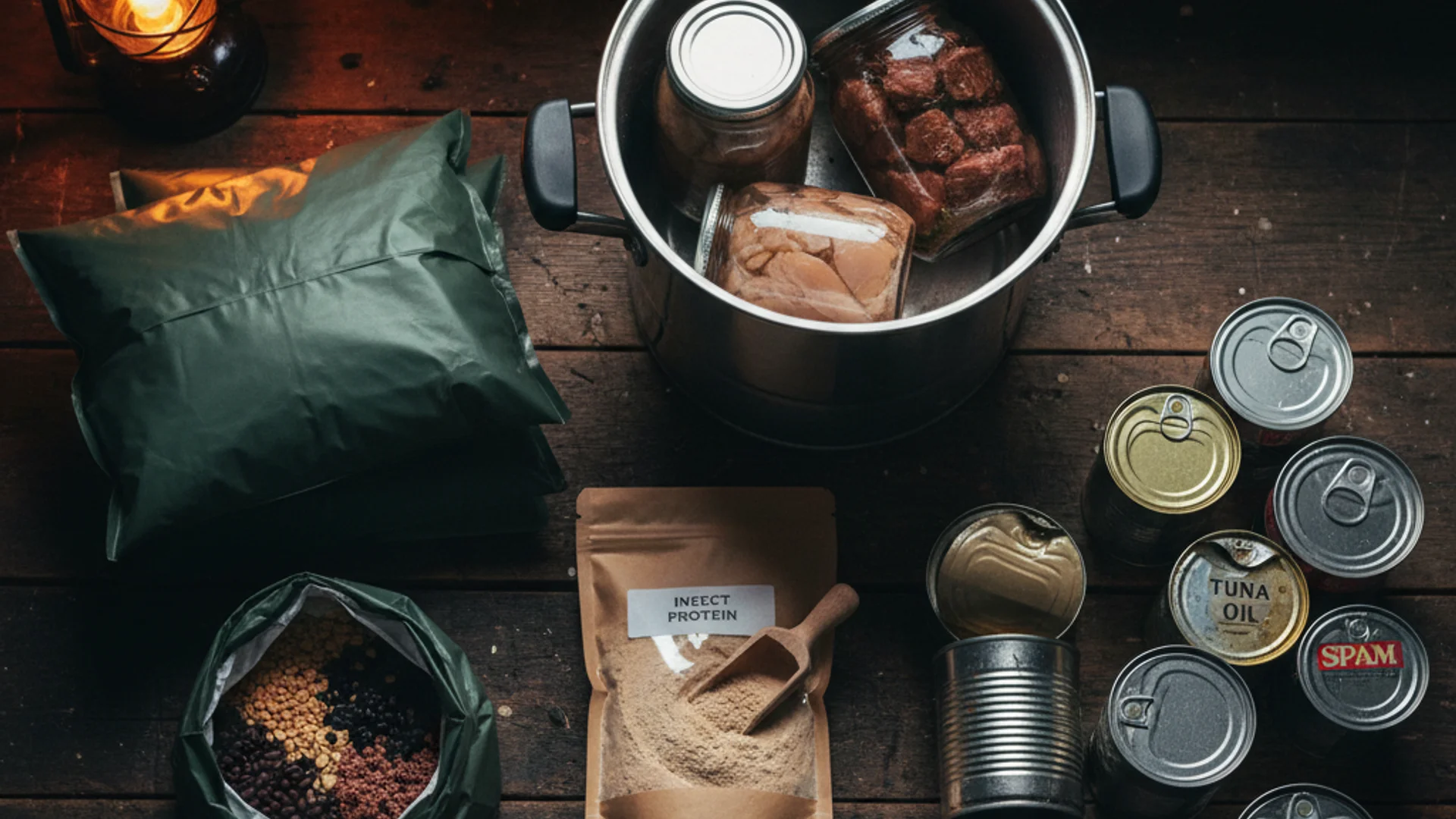
The realistic approach for beginners: Start with commercial canned meats (2-5 years), add freeze-dried options if budget allows (20+ years), include powdered milk and eggs (10-20 years), and if you're adventurous, experiment with cricket powder as a supplement. Learn pressure canning if you have access to bulk meat, understanding you're building a 5-10 year rotation system, not a once-and-forget solution. Store protein powder if you use it regularly with a strict rotation plan, but don't count on it for long-term emergencies.
The cost breakdown matters: Commercial canned chicken runs $2-4 per can (3-5 year shelf life), freeze-dried meat costs $8-15 per #10 can (25+ year shelf life), protein powder is $15-40 per tub (1-2 years realistic), cricket powder runs $20-40 per pound (similar to protein powder), and a pressure canner investment is $80-300 for equipment that will last decades.
The truth is that diversification beats optimization. You want multiple protein sources with different shelf lives, preparation requirements, and nutritional profiles. The prepper who only has rice and beans will face protein deficiency. The one who only has protein powder will find it degraded after two years. But the one who has commercial cans, freeze-dried options, properly stored grains and legumes, and maybe even some cricket powder tucked away? That person has actually broken free from the echo chamber.
Key Evidence
• One survivalist forum member reported eating home canned foods approaching 30 years old, canned by his grandmother in an All American pressure cooker purchased in the mid 1950s
• After about 3-4 years the nutritional value begins to decline at about 10% per year thereafter
• Longevity increases when jars are stored in a dry, cool, dark, clean place not subject to wide temperature fluctuations, specifically 50° to 70°F
• The total protein content of insect meal can be as high as 40–60%, with digestibility of amino acids in insect protein very high at 91–95%
• Crickets are high in protein, iron and vitamin B-12
• Insects have been processed into powder or meal to minimize visual associations and increase palatability
• An anthropologist working in Madagascar described sakondry as having a taste and consistency not unlike cubes of pork belly—crunchy on the outside, with that fatty meatiness of bacon in the middle
• A 2016 study found that the amino acid lysine in whey protein decreased from 5.5% to 4.2% in 12 months when stored at 70°F with 45% to 65% humidity
• Whey protein stored at 95°F were removed from a study within a year because of their concerning appearance
• Plant proteins such as brown rice, pea, hemp, and soy generally keep better than whey protein, offering a shelf life of two years on average
• Wheat berries stored in a mylar bag with an oxygen absorber can last 20+ years and contain 6.5 grams of protein in 1/4 cup
• Non-fat powdered milk contains a whopping 23 grams of protein in 1 cup, and when stored in mylar bags with oxygen absorber will last 10-20 years
• Professionally prepared freeze-dried meats can last on shelves for 25+ years
• Though jerky is dried, it still contains oils and fats that can go rancid very easily, with a shelf life of around 1 year
• Commercially canned meats like spam, vienna sausages, or canned chicken can last 2-5 years past the expiration date printed on the can according to the USDA
Sources
[1] National Center for Home Food Preservation / MSU Extension - USDA Home Canning Guidelines - Establishes official USDA one-year recommendation for home canned goods and quality vs safety distinction
[2] SurvivalistBoards.com - Real-World Home Canning Experiences - Provides anecdotal evidence of 30-year-old home canned meat consumption and nutritional decline data
[3] HealthyCanning.com - Home Canned Goods Storage and Safety - Clarifies that one-year guideline is 'best before' not safety limit, explains proper storage conditions
[4] WeLovePrepping.com / BackdoorSurvival.com - Commercial vs Home Canned Shelf Life - Establishes 2-5 year shelf life for commercial canned meats past expiration date per USDA
[5] NIH/PMC Research Studies - Edible Insect Protein Content and Digestibility - Scientific data on 40-60% protein content and 91-95% amino acid digestibility in insects
[6] TIME Magazine - Entomophagy Adoption and Palatability - First-hand accounts of researcher experiences with insect consumption and Madagascar anthropologist description
[7] NIH/PMC Studies - Insect Processing Methods and Nutritional Impact - Data on boiling vs frying effects on protein digestibility and processing methods for palatability
[8] Healthline / Gainful.com - Protein Powder Shelf Life Science - Establishes 1.5-year shelf life under normal conditions and lysine degradation data from 2016 study
[9] EarthChimp / FreeRx - Protein Powder Storage Temperature Studies - Documents failure of whey protein at 95°F within one year and temperature sensitivity
[10] VeganProteinPowder.reviews - Plant vs Whey Protein Comparison - Establishes 2-year shelf life advantage for plant proteins over whey protein
[11] RoguePreparedness.com - Comprehensive Shelf-Stable Protein Sources - Provides specific data on wheat berries (6.5g protein, 20+ years), powdered milk (23g protein, 10-20 years), and freeze-dried meats (25+ years)
[12] USDA / CrisisPreparedness.com - Jerky and Pemmican Shelf Life - Establishes 1-year shelf life for jerky due to fat rancidity and home jerky 1-2 month limitation
[13] FDA Supplement Regulations - Protein Powder Quality Standards - Documents lack of FDA regulation on protein powder expiration dates and manufacturer accountability
[14] TheHouseAndHomestead.com / ValleyFoodStorage.com - Pressure Canning Procedures - Explains pressure canner vs pressure cooker distinction and proper canning procedures
[15] FoodInJars.com - Practical Canning User Experiences - Real-world examples like 2011 ground beef jar opened for tacos with no problems
⚠️ Contradictions Noted
• USDA officially recommends 1-year shelf life for home canned goods, but real-world practitioners report safe consumption after 30 years - the discrepancy is that USDA guidelines focus on quality while practitioners focus on safety with intact seals
• Some sources claim pemmican can last 20+ years in freezer while others debate this heavily - shelf life appears highly variable based on preparation method and fat content
• Protein powder manufacturers sometimes claim 20+ year shelf life, but scientific studies show realistic shelf life of 1.5-2 years under normal conditions - manufacturer claims are not FDA regulated
Introduction
You've been lied to about protein storage. Not maliciously, maybe—but the prepper community has been copy-pasting the same advice for decades like a game of survival telephone. Rice, beans, canned tuna. Maybe some jerky if you're feeling fancy. Rinse and repeat until it becomes gospel. Here's the problem: most of that advice ranges from incomplete to actively wrong. Jerky goes rancid in about a year because of the fat content nobody mentions. That protein powder everyone swears will last forever? Scientific studies show it degrading significantly after 18 months, with amino acids breaking down even faster in normal storage conditions. And the USDA's "one year" guideline for home-canned meat? That's a quality recommendation, not a safety limit—practitioners have been safely eating properly canned meat that's literally older than their children. I'm going to show you nine protein sources that actually work for long-term storage, including some that'll make you uncomfortable (good, that means you're paying attention). You'll learn what actually survives time, what fails faster than advertised, and how to build a system that won't leave you protein-deficient when it matters most. Some of this will contradict what you've read elsewhere. Some of it will require you to get past cultural squeamishness. But all of it is backed by either scientific research or decades of real-world practice—not just recycled blog posts. By the end, you're going to take one action today, even if it's just buying your first can of something that'll outlast your car.
The 5-Minute Win: Commercial Canned Meat (Your Starting Point)
Before we get into the exotic stuff, let's get you a win right now. Close this tab after this section if you want—just do this one thing first. Go buy four cans of chicken, beef, or salmon from your grocery store. Not tomorrow. Today. Spend maybe $12 total. Put them in your pantry in a spot that stays cool and dark. Write today's date on the top with a Sharpie. Congratulations, you just bought yourself 2-5 years of emergency protein that requires zero special skills, zero equipment, and zero learning curve. Here's what most people don't realize: the USDA confirms that commercially canned meats like Spam, Vienna sausages, and canned chicken can last 2-5 years past the expiration date printed on the can. That's not prepper mythology—that's official guidance. The canning process itself is what matters. High heat under pressure kills everything that would make you sick, and as long as the seal stays intact, nothing gets back in. The optimal shelf life is 3-5 years, but in practice these cans can be stored twice as long as long as the cans aren't compromised. What does compromised look like? Bulging, rust that's eaten through the metal, or dents along the seam. Avoid those. Everything else is fair game. Storage matters more than you think. Keep them between 50°F and 70°F—basically anywhere in your house that isn't the garage in July or next to your furnace. Heat degrades both nutrition and safety faster than anything else. A basement corner, a bedroom closet, under your bed in a plastic tub—all perfectly fine. This is your foundation. Not sexy, not complicated, but it works. While you're figuring out the rest of this stuff, you've already got protein handled for the next several years. That's the point of starting here: you get immediate security while you build everything else.
The Home Canning Controversy: What the USDA Won't Say Out Loud
Now we're entering territory where official advice and real-world practice split dramatically. The National Center for Home Food Preservation recommends preserving enough food to last one year. But dig into survivalist forums and you'll find people eating home-canned meat that's pushing 30 years old—canned by grandmothers using All American pressure canners from the 1950s—with zero problems. So who's right? Technically, both. Here's the distinction almost nobody explains clearly: the USDA's one-year recommendation is about quality, not safety. After 3-4 years, nutritional value declines about 10% per year. After a decade, there's less nutritional point to eating it. But if the meat was pressure canned according to USDA standards and the seal is intact, it's still safe. Let me be extremely clear about something: you need a pressure canner, not a pressure cooker. These are different tools and mixing them up can kill you. Pressure cookers (like an Instant Pot) don't reach the sustained temperature needed to destroy botulism spores in low-acid foods like meat. Pressure canners do. This isn't the place to improvise. The practical reality is that you're building a 5-10 year rotation system, not a once-and-forget solution. One survivalist opened a quart jar of ground beef canned in September 2011 and used it for tacos—no problems. That's the real-world benchmark: a decade, give or take. Storage conditions are everything. Dry, cool, dark, clean, and temperature stable. Specifically 50° to 70°F without wild fluctuations. A jar that lives in your temperature-controlled basement will outlast one stored in your shed by years, maybe decades. The investment: $80-300 for a quality pressure canner that'll last the rest of your life. The skill curve: steeper than buying cans, but not advanced.
The payoff: bulk meat from sales, processed once, shelf-stable for years, with complete control over ingredients and quality. If you eat meat and you're serious about long-term preparedness, this is where you eventually need to go. But don't start here—start with the commercial cans from the last section while you learn.
Insect Protein: The Science Says You're Wrong to Be Disgusted
This is where I lose half of you, and that's fine. But if you're still reading, you're about to learn something that might genuinely save your life in a prolonged crisis: insects are one of the most protein-dense, resource-efficient, shelf-stable options available, and your disgust is cultural programming, not biology. The numbers first, because feelings don't matter until you understand the facts. Insect meal contains 40-60% protein with amino acid digestibility of 91-95%. For context, that's comparable to or better than most conventional meats. Crickets are high in protein, iron, and vitamin B-12. Grasshoppers, crickets, and mealworms contain significantly higher sources of minerals like iron, zinc, copper, and magnesium than beef—while requiring less land, water, and feed. Here's the key limitation: insects are lower in the essential amino acids methionine and tryptophan compared to conventional meats. That means they work as part of a diverse protein strategy, not as a direct replacement. File that away. Now let's address the elephant (or cricket) in the room: palatability. A researcher in France took three attempts before he could relax enough to taste his first cricket. Now he spoons cricket powder over yogurt, sprinkles larvae over salads like bacon bits, and fries up frozen crickets for supper. An anthropologist working in Madagascar described sakondry (a local insect) as having a taste and consistency not unlike cubes of pork belly—crunchy on the outside, with that fatty meatiness of bacon in the middle. Processing changes everything. Insects have been processed into powder or meal specifically to minimize visual associations and increase palatability. You're not crunching into a whole cricket with legs sticking out of your teeth—you're adding a neutral-to-nutty powder to something you already eat.
Research shows that boiling improves protein digestibility better than frying (49.9% versus 41.1%), and water absorption during cooking matters. Practical application: bread enriched with 5% cinereous cockroach flour showed no significant difference from standard wheat bread and was classified as good-quality bread. Once you hit 10% replacement, texture changes become noticeable, so there's a threshold. You can buy cricket powder right now—$20-40 per pound, similar shelf life to protein powder (1-2 years under good conditions), and it works as a supplement to stretch other protein sources. You don't have to raise crickets in your basement or forage for grasshoppers. Just buy the powder, try a little in a smoothie or mixed into ground beef, and see if you can get past the mental block. Because in a real long-term scenario where supply chains are shattered, this might be the difference between adequate protein and deficiency.
The Protein Powder Reality Check Nobody Wants to Hear
Every prepper blog recommends stockpiling protein powder. The myth floating around is that it lasts 20+ years if stored properly. Let me be direct: that's bullshit, and the science proves it. Protein powders usually have a listed expiration date of 1-2 years after production. Those dates exist because research shows most protein powders have a shelf life of roughly 1.5 years when stored under normal conditions—70°F and 35% humidity. You can push that to two years if the protein contains additives like maltodextrin, lecithin, and salt, which most do. Here's the gotcha: a 2016 study found that the amino acid lysine in whey protein decreased from 5.5% to 4.2% in just 12 months when stored at 70°F with 45-65% humidity. That's a 24% loss of a critical amino acid in one year under completely normal storage conditions. Even worse, whey protein stored at 95°F had to be removed from the study within a year because of their concerning appearance. Samples in sealed bags had a shelf life of around nine months at that temperature. Temperature isn't just a minor factor—it's the factor. Heat destroys protein structure and nutrition faster than almost anything else. If your protein powder lives in your garage where it hits 95°F in summer, you're wasting your money. Don't refrigerate or freeze it either—constant temperature and humidity changes lead to clumping, moisture buildup, bacterial growth, and can damage the powder's structure. Room temperature, stable, dark, and dry. That's it. The plant-based advantage: plant proteins like brown rice, pea, hemp, and soy generally keep better than whey protein, offering a shelf life of two years on average. Vegan proteins expire slower than whey protein assuming equal storage conditions. If you're choosing protein powder for storage, plant-based is objectively better.
But here's the real talk: the FDA doesn't require supplement manufacturers to include expiration dates on their products, and they don't regulate the quality, quantity, or type of ingredients in supplements. Manufacturer claims might not be accurate, and you have no regulatory protection. You're working on trust. The realistic approach: if you use protein powder regularly, buy it, store it properly, and rotate it every 1-2 years. It's a short-term convenience, not a long-term storage solution. If you're not using it now, don't stockpile it for emergencies—you're better off with literally everything else in this article.
The Unsexy Powerhouses: Powdered Milk, Eggs, and Wheat Berries
While everyone's obsessing over freeze-dried steaks and tactical jerky, some of the best long-term protein sources are sitting in the bulk section of your grocery store, boring as hell and ridiculously effective. Non-fat powdered milk contains 23 grams of protein in one cup. Read that again—23 grams. That's more than three eggs or a decent-sized chicken breast. When stored in mylar bags with an oxygen absorber, it'll last 10-20 years. The catch: it has to be non-fat. The fat in whole milk powder goes rancid relatively quickly. Non-fat doesn't have that problem. Freeze-dried powdered eggs can last 20+ years under the same storage conditions. Whole eggs contain about 6 grams of protein each, so the powdered equivalent maintains similar ratios. You can bake with them, scramble them (the texture's a little off but functional), or add them to other foods to boost protein content invisibly. Wheat berries stored in mylar bags with oxygen absorbers can last 20+ years and contain 6.5 grams of protein in 1/4 cup. That's not a huge amount per serving, but wheat berries are cheap, versatile, and when combined with legumes, they form complete proteins. You need a grain mill to process them into flour, or you can cook them whole like rice. The learning curve is low and the payoff is decades of stable storage. Here's why these matter: diversification beats optimization. You don't need the single best protein source—you need multiple sources with different shelf lives, costs, and preparation methods. The person with only freeze-dried meat has all their protein in the most expensive category. The person with only protein powder watches it degrade after two years. But the person with powdered milk, eggs, wheat berries, commercial cans, and maybe some home-canned meat? That person has redundancy.
The cost breakdown: powdered milk runs about $1-2 per serving, freeze-dried eggs around $2-3 per serving equivalent, and wheat berries maybe $0.10 per serving. Compare that to freeze-dried meat at $3-5 per serving. You can build a year's worth of protein for a fraction of the cost by focusing on these unsexy staples. Practical first step: buy a 5-pound bag of non-fat powdered milk, a dozen mylar bags, and a pack of oxygen absorbers (about $40 total). Spend an hour repackaging the milk into mylar bags, seal them with a clothes iron or hair straightener, and stick them in a closet. You just bought yourself 10-20 years of protein for less than a tank of gas.
What Doesn't Work: The Jerky Myth and Freeze-Dried Hype
Let's kill some sacred cows, because the prepper world has a few protein recommendations that range from overhyped to outright wrong. Jerky is not a long-term storage solution. I know this hurts. Jerky feels like survival food—it's dried, portable, requires no prep, and humans have been making it for thousands of years. But though jerky is dried, it still contains oils and fats that can go rancid very easily. Commercially prepared jerky has a shelf life of about one year. Home-prepared jerky according to the USDA? One to two months. That's it. The fat is the problem. You can't remove it completely, and even small amounts oxidize over time, especially in the presence of air and heat. Vacuum sealing helps, refrigeration extends it somewhat, but you're still looking at a year maximum. Jerky is a rotation item, not a storage item. Eat it, replace it, repeat. Pemmican gets thrown around as the traditional long-term solution—rendered fat and dried meat pounded together into calorie-dense cakes. Claimed shelf life ranges from 1-5 years, with some people insisting freezer storage extends this to 20+ years. That last claim is heavily debated and depends entirely on preparation method, fat quality, and storage conditions. It's not reliable enough to count on without extensive testing of your specific recipe. Now let's talk about freeze-dried meat, which actually works but comes with a massive asterisk: cost. Professionally prepared freeze-dried meats can last on shelves for 25+ years. Freeze-dried chicken, sausage, or beef from reputable companies will genuinely outlast almost everything else in your pantry. A #10 can runs $8-15 and contains multiple servings. But here's the math problem: if you're building a year's worth of protein for a family, you're looking at thousands of dollars if you go exclusively freeze-dried.
It works, the shelf life is real, but it's not accessible for most people as the primary solution. It's better used as the 20+ year layer of your system, supplemented by cheaper options with shorter but still substantial shelf lives. The smarter play: use commercial canned meat (2-5 years, $2-4 per can) as your primary rotation stock. Add home-canned if you have the skills (5-10 years, cost of bulk meat plus equipment). Layer in powdered milk and eggs (10-20 years, very cheap). Then add freeze-dried meat as your deep storage for true long-term coverage. You've just built a diversified system where something is always ready to use, nothing goes to waste from expiration, and you're not dropping $5,000 on freeze-dried everything.
Frequently Asked Questions
Is it actually safe to eat home-canned meat that's older than one year?
Yes, if—and this is critical—it was pressure canned according to USDA standards and the seal remains intact. The USDA's one-year recommendation is about quality (taste, texture, nutritional value), not safety. Real-world practitioners have safely consumed properly canned meat that's decades old. The key factors: it must be pressure canned (not water bath, not pressure cooked), stored in stable temperatures between 50-70°F, and the seal must be intact (no bulging, no leaks, no rust). Nutritional value declines about 10% per year after 3-4 years, so by year 10 it's less nutritious but still safe to eat. If you're uncertain about your canning method or storage conditions, stick to the one-year guideline. Don't gamble with botulism.
How do I get past the disgust factor of eating insects?
Start with powder, not whole insects. Cricket powder or mealworm powder looks like any other tan-colored protein powder and can be added to foods you already eat—smoothies, baked goods, mixed into ground meat. You're not looking at legs and antennae. Start with tiny amounts (a teaspoon) mixed into something strongly flavored. The taste is described as nutty or neutral, not gross. If even the powder bothers you, remember this is about survival options, not your everyday diet. You don't have to eat insects now—you just need to know they're viable if conventional protein becomes scarce. One researcher took three attempts before he could try his first cricket, and now he eats them regularly. The barrier is psychological, not biological.
Can I just stockpile protein powder and call it done?
No, and here's why: protein powder realistically lasts 1.5-2 years under normal storage conditions, with key amino acids degrading significantly in that time. A 2016 study showed lysine content dropping 24% in just 12 months. Plant-based protein powders last slightly longer (about 2 years) than whey, but neither is a true long-term solution. Heat destroys protein powder quickly—samples stored at 95°F failed within a year. If you use protein powder regularly and rotate your stock every year or two, fine. But don't treat it as emergency storage that'll last a decade. You need longer-lasting options like commercial canned meat (2-5 years), freeze-dried (25+ years), or powdered milk and eggs (10-20 years).
What's the single best protein source if I can only afford one option?
Commercial canned meat. It requires zero special skills, zero equipment, minimal cost ($2-4 per can), lasts 2-5 years past the expiration date, needs no special storage beyond 'cool and dry,' and you can buy it today at any grocery store. It's not the longest-lasting option, but it's the most accessible starting point that actually works. Once you have that foundation, add non-fat powdered milk next—23 grams of protein per cup, lasts 10-20 years in mylar with oxygen absorbers, and costs very little. Those two things will cover you for years while you figure out everything else.
Why isn't jerky recommended when it's been used for centuries?
Because jerky contains fats and oils that go rancid, giving it a realistic shelf life of only about one year for commercial jerky and 1-2 months for homemade according to the USDA. Yes, humans have made jerky for centuries, but they also made it regularly and consumed it relatively quickly—it was never intended as multi-year storage. Modern vacuum sealing and refrigeration extend this somewhat, but jerky remains a rotation food, not a storage food. The survival community has romanticized it beyond its actual capabilities. If you love jerky, keep it in your system, just treat it like fresh food with a one-year maximum lifespan, not like a 10-year emergency supply.
What storage mistakes will ruin my protein sources fastest?
Heat is enemy number one. Protein powder at 95°F fails within a year. Canned goods degrade rapidly above 85°F. Store everything between 50-70°F if possible. Second mistake: humidity and temperature fluctuations. Don't put anything in garages, sheds, or attics unless they're climate controlled. Don't refrigerate protein powder—the temperature changes cause moisture and clumping. Third mistake: ignoring light exposure. UV light degrades nutrients, so store in dark places or opaque containers. Fourth: buying more than you can rotate. If your protein powder expires before you use it, you wasted money. Start small, learn your usage patterns, then scale up. Fifth: putting all your protein in one category. Diversify across short, medium, and long-term options so you're never starting from zero.
Do I really need oxygen absorbers and mylar bags?
For anything you want to last 10+ years, yes. Oxygen absorbers remove oxygen from sealed containers, which prevents oxidation (rancidity) and kills insects and their eggs. Mylar bags block light and moisture while creating an airtight seal when heat-sealed. Together they extend shelf life from months or single-digit years to 10-20+ years for dry goods like powdered milk, eggs, wheat berries, and legumes. The cost is minimal—about $0.50-1.00 per bag including absorbers—and you can seal them with a cheap clothes iron or hair straightener. You don't need them for commercial canned goods (already sealed) or short-term storage (under 2 years), but for building a decade-plus system, they're non-negotiable.
Conclusion
You now know more about realistic long-term protein storage than most people who've been prepping for years. Not because the information is secret, but because most prepper content just recycles the same incomplete advice without questioning whether it actually works. You've seen the research, you understand the tradeoffs, and you know where official recommendations diverge from real-world practice. Here's your action step: pick one thing from this article and do it this week. Buy four cans of chicken and stick them in your pantry. Order non-fat powdered milk and some mylar bags. Grab a container of cricket powder just to see if you can get past the mental barrier. Start with something cheap and easy that gives you a win, then build from there. The goal isn't perfection—it's having more protein security next week than you do today. And if you want tools that work when the internet doesn't, when supply chains are broken, and when you need answers without connectivity, check out SurvivalBrain at https://survivalbrain.ai/#waitlist—because knowing what to do only matters if you can access that knowledge when it counts.
Get Early Access to Uncensored Offline AI
Join the waitlist for SurvivalBrain launching Q1 2026. Early supporters lock in $149 lifetime pricing (save $50).
Lock In $149 Pricing