23andMe Just Leaked Your Genetic Data to Hackers: What Happens When Your DNA Is Stolen
Introduction
On October 1, 2023, a hacker calling themselves "Golem" posted something for sale on BreachForums that you can't factory reset. Not credit cards. Not passwords. Your actual DNA. The genetic code that makes you who you are, bundled with your name, photo, birth year, and family tree. They advertised 1 million profiles of Ashkenazi Jewish users and 100,000 Chinese users—specifically curated ethnic lists—for $1 to $10 per person. Through those compromised accounts, they'd accessed data from 6.9 million people total. Nearly half of 23andMe's entire customer base. Here's the thing that makes this different from every other data breach you've heard about: you can't change your password and move on. As one affected customer told regulators with brutal clarity, "Unlike usernames, passwords and e-mail addresses, you can't change your genetic makeup when a data breach occurs." Your DNA is now out there, permanently, in the hands of people who organized it by ethnicity and sold it on a forum where criminals shop for tools. And 23andMe knew something was wrong for five months before they admitted it. During that time, a hacker logged into a free account over a million times in a single day—so many login attempts that the entire platform crashed. 23andMe investigated, found nothing, and let the breach continue. When someone reported the theft in August via customer service and Reddit, the company called it a hoax. They didn't confirm the breach until October, after the stolen data was already being advertised for sale. Then, in March 2025, 23andMe declared bankruptcy, which means your genetic data might end up as an asset sold to the highest bidder. This is the story of how your biological identity became a commodity you can never take back.
How 14,000 Accounts Became 6.9 Million Victims
The attackers didn't need sophisticated malware. They used credential stuffing—recycling passwords from old breaches at completely unrelated companies—to compromise approximately 14,000 accounts. That's only 0.1% of 23andMe's 14 million users. In a normal breach, that'd be the end of it. But genetic databases don't work like normal databases. 23andMe has a feature called DNA Relatives. It's designed to connect you with genetic family members who also used the service. One compromised account becomes a window into an entire family tree. Through those 14,000 breached accounts, hackers accessed information from 5.5 million users via DNA Relatives. Another 1.4 million users had their family tree profiles exposed the same way. One stolen password unlocks your sister, your cousins, your second cousin twice removed who you've never met. The stolen data wasn't minimal. According to the joint investigation by Canada's Privacy Commissioner and the UK's Information Commissioner's Office, hackers obtained everything customers had chosen to share with DNA matches: names, profile photos, birth years, locations, family surnames, grandparents' birthplaces, ethnicity estimates, mitochondrial DNA haplogroup, Y-chromosome DNA haplogroup, links to external family trees, and whatever text people had written in their "About" section. Combined with genetic ancestry results, this created comprehensive biological and genealogical profiles. Not just "who you are" but "who you're related to" and "where your ancestors came from." This cascading exposure is the design flaw baked into every genetic database. Your privacy isn't just in your hands—it's in the hands of every distant relative who decided to spit in a tube. You could be the most security-conscious person alive, never touch a DNA test, and still end up exposed because your third cousin used "Password123" and enabled DNA Relatives.
The vulnerability isn't individual. It's structural.
The Five-Month Warning Window They Ignored
The breach didn't happen overnight. It was a five-month looting operation, and 23andMe had multiple chances to stop it. The intrusion began on April 29, 2023. For five months, hackers systematically accessed more than 18,000 customer accounts. This wasn't a smash-and-grab. It was methodical extraction. In July 2023, the hacker used a computer program to log into a single free account—one with no associated DNA sample—over a million times in a single day. The volume was so intense that 23andMe's entire platform stopped working. Users couldn't log in. The site went down. 23andMe investigated the outage, but according to the regulatory report, they failed to detect that this was part of a larger ongoing data breach. They saw the symptom, missed the disease, and let the breach continue. In August 2023, someone reported the theft via 23andMe's customer service portal. The same claim appeared on Reddit: over 10 million users affected. 23andMe dismissed it as a hoax. They didn't confirm the breach until October, and only after an employee discovered the stolen data advertised for sale on Reddit. By then, Golem had already been selling curated lists on BreachForums for weeks. The UK's Information Commissioner's Office conducted a detailed investigation and the findings were damning. 23andMe required passwords of only eight characters minimum with minimal complexity requirements—falling short of the ICO's own guidance recommending at least ten characters. The company chose not to make multi-factor authentication mandatory because, in their own words, they wanted to avoid friction in the user experience. They didn't perform robust checks to verify if customers were reusing compromised credentials from previous breaches.
Once an account was accessed, there were no additional identity verification measures to protect the most sensitive data—including raw DNA files—from being accessed and downloaded. The UK ICO fined 23andMe £2.31 million. The company will pay $30 million to settle a class action lawsuit. That works out to roughly $10 per victim. Ten dollars for the permanent exposure of your genetic code.
What Hackers Actually Do With Stolen DNA
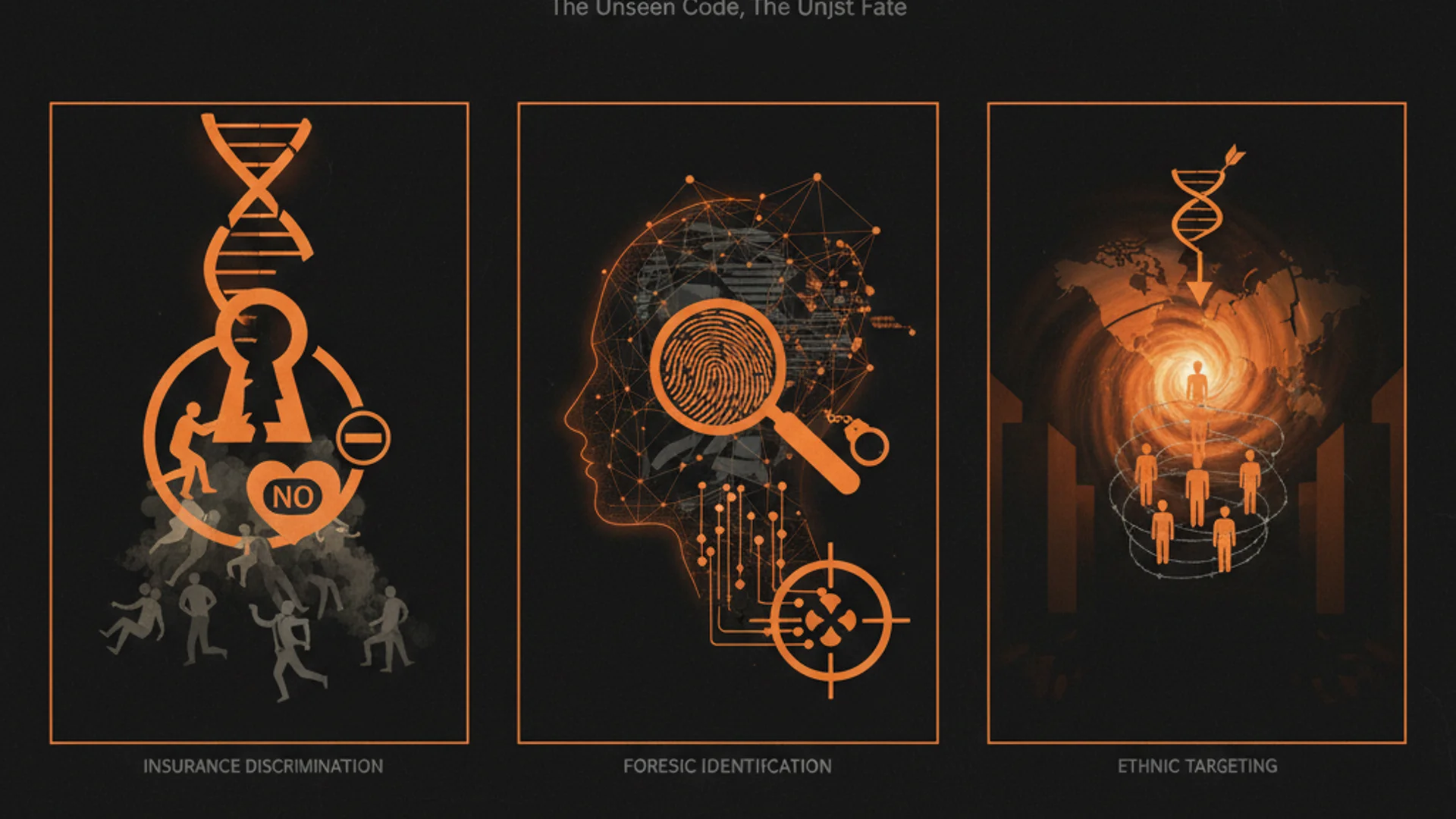
Steve Stone, Head of Rubrik Zero Labs, said it clearly: "The real story in the 23andMe hack is the type of data threat actors now have. This is genetic information with all the associated implications (family, familial secrets, health information, etc). This information could be weaponized in far more impactful ways than a simple public data dump." Let's talk about what weaponization actually looks like. Insurance discrimination is already happening. The Genetic Information Nondiscrimination Act (GINA) from 2008 protects against genetic discrimination in health insurance and employment. But GINA doesn't cover long-term care, disability, or life insurance. Some Americans have already been denied life insurance policies based not on a disease they currently have, but on one their genes suggest they might develop in the future. A Texas Republican insurance executive who helped write anti-discrimination law warned: "With genetic tests, insurance companies can virtually eliminate the guesswork in underwriting. They can seek out people who are genetically pure, creating a ghetto of the uninsured, because they will know who is likely to get a particular disease at a particular age." The future of life insurance underwriting is expected to become increasingly computational and automated via AI and the collection of more personalized genetic data. Risk prediction can now be performed much earlier in your life—before you ever show symptoms. Forensic identification creates what researchers call "guilt-by-association vulnerability." FamilyTreeDNA came under fire for voluntarily giving the FBI routine access to its database of more than 1 million users, allowing agents to test crime scene DNA against customer profiles to find family matches.
Since these records are difficult to expunge, they can restrict opportunities not just for detainees but for their relatives and descendants. And you don't need to submit your own DNA to be identified. Researchers proved this by using a direct-to-consumer DNA database to find distant relatives with shared genetic traits. After a day of mapping lineage using publicly available genealogy records, they successfully identified a target person by tracing relatives back to a common great-grandparent. The choices of distant relatives impact the entire familial tree, including people who never agreed to share their genetic data. Ethnic targeting was the explicit business model of the 23andMe breach. In January 2024, a separate class action lawsuit alleged that 23andMe failed to notify customers of Chinese and Ashkenazi Jewish heritage that their genetic information had been bundled in "specially curated lists" and offered for sale on the dark web. The combination of postcodes, race, ethnic origin, familial connections, and health data creates profiles that can be exploited for surveillance, discrimination, or worse. This isn't hypothetical. It happened. Someone built ethnic targeting lists from your genetic data and sold them to strangers.
The Data You Can Never Delete
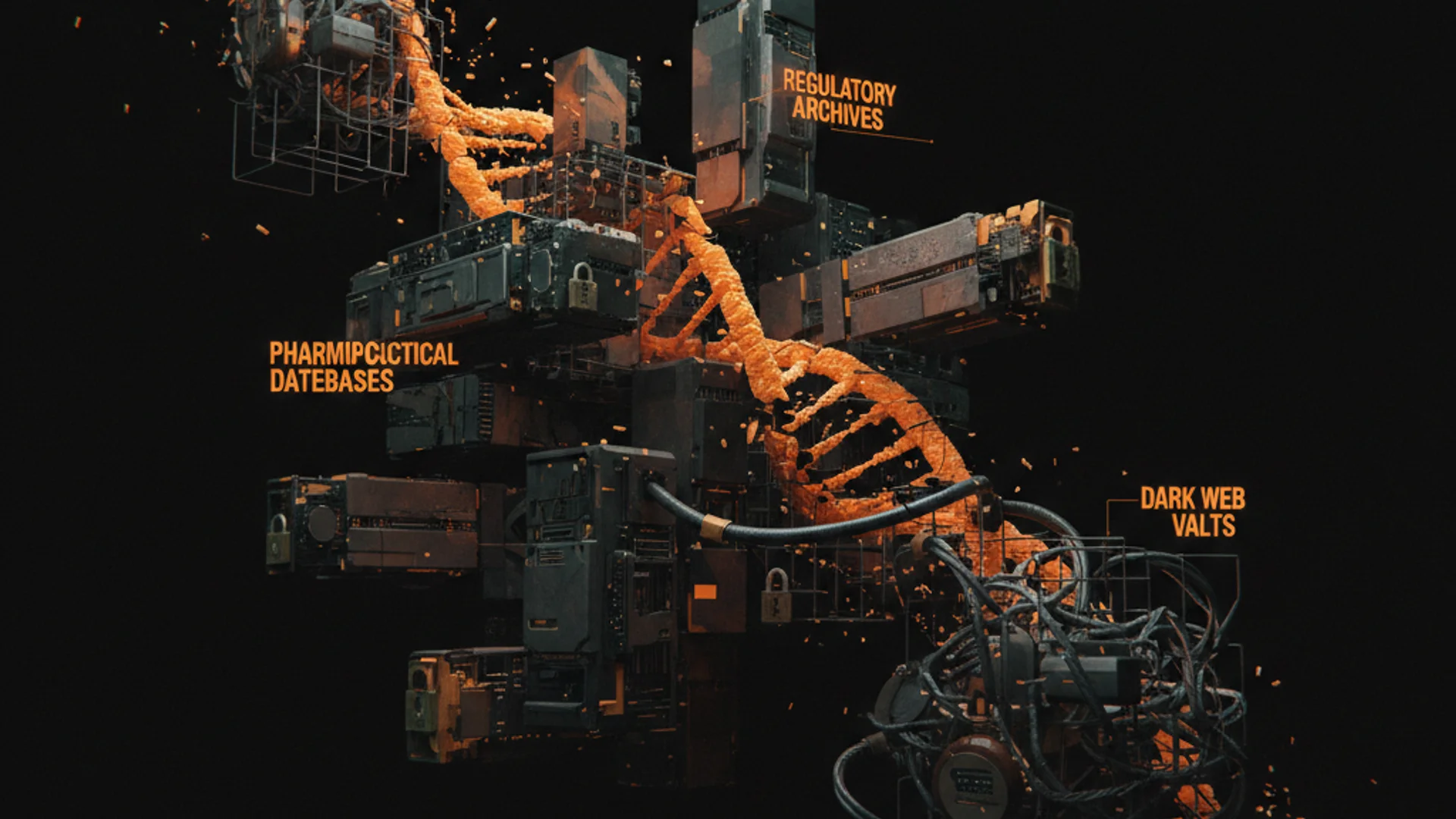
Here's where it gets worse. Unlike a stolen credit card, you cannot change your DNA after it's been leaked online. This permanence creates cascading vulnerabilities that compound over time. On March 23, 2025, 23andMe declared bankruptcy. According to the company's user agreement, "if the company is acquired, customers' data may be accessed or sold as part of such a transaction." Your genetic code might end up as an asset in a bankruptcy sale, transferred to whatever entity bids highest. Maybe another genetic testing company. Maybe a data broker. Maybe an insurance consortium. The agreement you clicked "I accept" on allows it. Even if you want to delete your data, the process is what one investigative journalist called "brutally difficult." But here's the regulatory gap that makes true deletion nearly impossible: The Federal Clinical Laboratory Improvement Amendments (CLIA) of 1988 require laboratories to retain de-identified genetic data for regulatory purposes. CLIA mandates that 23andMe's genotyping laboratories hold an archive of users' de-identified genetic information for a certain period of time (often two years) for regulatory compliance. Even when companies promise deletion, federal law may prevent it. Then there's the research and commercial use layer. In 2018, 23andMe signed a deal with pharmaceutical company GlaxoSmithKline allowing the company to use customer data for drug research.
According to a paper in the Mayo Clinic Proceedings journal, "Subsequent researchers may want to use genetic data for future investigations, making it difficult to keep participants abreast of the various uses of their genetic data." Privacy expert Pamela Hepp noted: "Even if a consumer deletes their DNA information, that is only effective if the DNA hasn't already been shared." Your genetic data might be sitting in a pharmaceutical company's research database, a federal regulatory archive, a bankruptcy asset list, and on a dark web forum simultaneously. And there's no central delete button that reaches all of them.
The Regulatory Vacuum That Allows This
Direct-to-consumer genetic testing companies exist in a regulatory gray zone that would be hilarious if it wasn't so dangerous. These companies fall outside the scope of the Health Insurance Portability and Accountability Act (HIPAA), which is the main privacy law for health information. Commercial DNA testing services aren't covered by HIPAA because they aren't health providers or insurers. They're "consumer products," like a meal kit subscription or a streaming service. Except instead of recipes or movies, they're collecting your biological source code. A 2016 survey showed that only a third of companies offering genetic testing services online properly explained to customers how their data would be used. Jennifer King, director of consumer privacy at Stanford Law School's Center for Internet and Society, put it bluntly: "There are no limits on what these companies can do; they just have to state it in their privacy policies, which they can change at any time (though you may have to consent to it again)." The Federal Trade Commission has begun enforcement actions. In recent genetic testing cases, companies paid substantial financial settlements and were required to delete or destroy certain biometric data or materials. But those remedies came after the harm was done. The orders included prohibitions on misrepresentations, mandates to obtain affirmative express consent for future data use, and required security programs with independent assessments. It's a regulatory band-aid applied after the patient has already bled out. 23andMe will pay $30 million to settle the class action lawsuit. Over 3 million people were affected according to Malwarebytes' data. That's roughly $10 per victim for permanent exposure of their most intimate biological data. The UK fined them £2.31 million. These penalties are rounding errors for the genetic testing industry.
There's no consequence severe enough to change behavior, and no regulatory framework strong enough to prevent the next breach. The scope of future risk is staggering. MIT Technology Review predicts more than 100 million people will be part of commercial genetic databases within the next two years. Ancestry's databases currently contain over 10 million genetic information records. Combined, these databases create a surveillance infrastructure that can identify virtually anyone in these populations through familial matching—whether they consented to testing or not. The vulnerability is systemic, not isolated to one company. More than 92 million accounts from MyHeritage were found on a private server in 2018. The fundamental insecurity of these platforms is the feature, not the bug.
Frequently Asked Questions
Was my 23andMe account affected by the breach even if I didn't get a notification?
Possibly, yes. The breach affected 6.9 million users, but only 14,000 accounts were directly compromised. If you used the DNA Relatives feature, your data could have been accessed through a compromised relative's account without your account ever being hacked. 23andMe's notification process was inconsistent, and many users whose data was exposed through familial connections may not have received direct communication about the breach.
Can I actually delete my genetic data from 23andMe?
Not entirely. While 23andMe offers a deletion process, federal law (CLIA) requires laboratories to retain de-identified genetic information for regulatory compliance, often for two years minimum. Additionally, if your data was already shared with research partners like GlaxoSmithKline, or if it was included in the breach and distributed on the dark web, deletion from 23andMe's active database doesn't remove it from those other locations. One journalist described the deletion process as 'brutally difficult' even to attempt.
I never took a DNA test. Am I still at risk?
Yes. Researchers have demonstrated that they can identify individuals who never submitted DNA by using familial matching through relatives who did take tests. If your siblings, cousins, or even distant relatives used genetic testing services, your genetic profile can be partially reconstructed and you can be identified through shared genetic markers and genealogical records. This is called the 'guilt-by-association vulnerability'—your privacy depends on the security choices of people you may never have met.
Can insurance companies legally use my stolen genetic data against me?
In some cases, yes. While GINA (Genetic Information Nondiscrimination Act) prohibits discrimination in health insurance and employment, it does NOT cover life insurance, long-term care insurance, or disability insurance. People have already been denied life insurance based on genetic predispositions to future diseases. If your genetic data is available on the dark web or through data brokers, there's no practical enforcement mechanism preventing insurers from accessing it, even if they're not supposed to use it for underwriting decisions.
What happened to the hacker who stole the data?
The hacker known as 'Golem' has not been publicly identified or prosecuted as of the most recent reports. The stolen data was sold on BreachForums, a notorious dark web marketplace, and distributed widely. Because the breach involved credential stuffing using passwords from previous unrelated breaches, and because the attacker operated through anonymizing networks, attribution and prosecution remain extremely difficult. The data is already out there and being traded, regardless of whether the original perpetrator is ever caught.
Is 23andMe's bankruptcy going to make this worse?
Almost certainly. 23andMe declared bankruptcy in March 2025, and their user agreement explicitly states that customer data may be accessed or sold as part of an acquisition or bankruptcy proceeding. Your genetic information could become an asset purchased by another company, a data broker, an insurance consortium, or any entity willing to bid. You have no control over who ends up owning your genetic data if the company is sold or liquidated, and there's no legal requirement that the new owner maintain the same privacy standards (however inadequate) that 23andMe claimed to follow.
Should I be worried about the ethnic targeting lists that were created?
Yes, and here's why: the hacker specifically created curated lists of 1 million Ashkenazi Jewish users and 100,000 Chinese users, which were sold separately on the dark web. This wasn't random data dumping—it was deliberate ethnic profiling using genetic information. The combination of genetic ethnicity data, family connections, geographic location, and names creates profiles that can be used for surveillance, discrimination, or targeting by malicious actors, hostile governments, or extremist groups. This type of targeting was previously theoretical; the 23andMe breach made it operational.
Conclusion
If you've used 23andMe, Ancestry, MyHeritage, or any genetic testing service, here's what you need to do right now: Log into your account and check your security settings. Enable multi-factor authentication if it's available (it wasn't mandatory when the breach happened, but some platforms have added it since). Check if you're enrolled in DNA Relatives or similar family matching features—that's the mechanism that turned 14,000 compromised accounts into 6.9 million exposed users. If you don't need that feature, turn it off. Request a copy of your data so you know exactly what they have, and if you want to attempt deletion, start that process now, knowing it won't be complete or permanent. Check if you're part of the class action settlement at the official settlement website to claim your approximately $10 in compensation for having your genetic code stolen forever. But here's the bigger truth: this isn't a problem you can solve with better password hygiene. The genetic testing industry operates in a regulatory vacuum, handling the most intimate data humans produce, with security standards that would be unacceptable for a banking app. The surveillance infrastructure is already built, your data is likely already in it, and the next breach is a matter of when, not if. If you're looking for tools that actually respect privacy—systems that work offline, that don't require you to upload your most sensitive information to someone else's server—that's exactly why we're building SurvivalBrain. An offline AI that runs on your device, with no internet required, no data harvesting, no third-party access. Your information stays yours, period. We're launching Q1 2026 with early access at $149 ($50 off the regular $199 price). Join the waitlist at https://survivalbrain.ai/#waitlist if you're tired of being the product instead of the customer. Your DNA is already out there.
Your future data doesn't have to be.
Get Early Access to Uncensored Offline AI
Join the waitlist for SurvivalBrain launching Q1 2026. Early supporters lock in $149 lifetime pricing (save $50).
Lock In $149 Pricing