ProtonMail Isn't the Only One Lying: How "Encrypted" Email Providers Can Still Read Your Messages
Introduction
You probably think your encrypted email is private. That's what they told you, right? ProtonMail, Tutanota, even Gmail with its "confidential mode"—they all use the word "encrypted" like it's a magic spell that makes surveillance disappear. Here's what they don't tell you: most "encrypted" email providers can still read your messages. Not because the encryption is broken, but because they hold the keys. It's like putting your diary in a locked box and handing the key to a stranger who promises they'll only open it if someone really important asks nicely. And guess what? Important people ask all the time. In 2022, Meta received over 450,000 government data requests covering more than 800,000 users. They complied 76% of the time globally. In the US? 88%. The word "encrypted" has become the tech industry's favorite lie of omission. It's technically true and functionally meaningless, like calling a screen door "secure" because it has a latch. The real question isn't whether your email is encrypted—it's who can decrypt it, and what they can see even when they can't crack it open. That answer is going to piss you off.
The Hushmail Lesson: When 'Encrypted' Means 'Encrypted Until We're Told Not To'
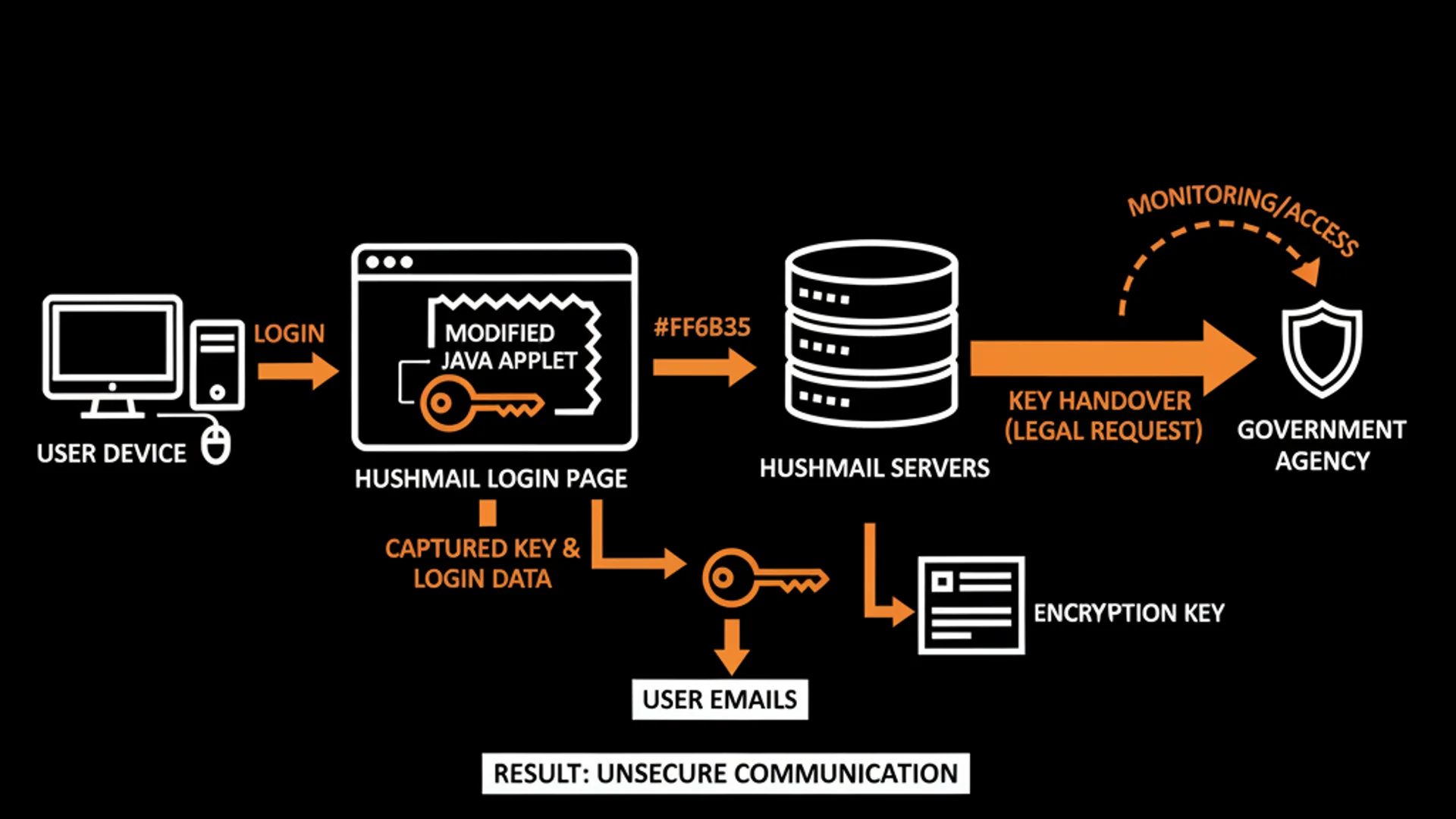
The 2007 Hushmail case should be taught in every computer science class as the definitive example of what encrypted email really means when the provider holds your keys. Canadian courts compelled Hushmail to hand over a user's emails to US authorities under a mutual legal assistance treaty. You'd think end-to-end encryption would have protected those messages. It didn't. The technical execution was elegant in its brutality. Hushmail was compelled to serve a modified version of their Java applet to the target user—one with a built-in backdoor. When the user logged in and entered their password, the backdoored applet captured the encryption key and sent it straight to Hushmail. Then Hushmail handed it to the government. The encryption was real. The privacy was theater. This wasn't a hack or a vulnerability. This was the architecture working exactly as designed. When providers control your encryption keys, they can access your messages—voluntarily or otherwise. Transport Layer Security (TLS) encryption protects your email while it travels between servers, like an armored truck moving between bank branches. But once it arrives, the provider has the keys to the vault. Most email providers—Gmail, Microsoft, Yahoo—use this exact model. They encrypt your messages at rest on their servers, which sounds great until you realize they're the ones holding the encryption keys. That means they can read everything whenever they want, and they can be legally compelled to do so. It's not a bug. It's the business model. The distinction between TLS transport encryption and genuine end-to-end encryption (E2EE) is everything. With E2EE, only the sender and recipient hold the keys—no one else, not even the service provider, can decrypt the message. But implementing real E2EE means users have to manage their own private keys, and that's where the whole thing falls apart.
Because most people can't do that, and providers know it.
The ProtonMail Problem (And Everyone Else's, Too)
ProtonMail markets itself as the gold standard of encrypted email. Swiss jurisdiction, end-to-end encryption, zero access architecture. It's the service journalists and activists are told to use. And compared to Gmail, it's vastly better. But there's a problem they don't advertise: ProtonMail doesn't encrypt your subject lines. That's not a minor technical detail. Subject lines often reveal exactly what sensitive topic is being discussed—"Re: Whistleblower documents," "Meeting about the investigation," "Your test results." The body of your email might be locked down tight, but the subject line is sitting there in plaintext, visible to anyone with access to the server or the ability to compel ProtonMail to hand it over. Tutanota (now Tuta) does encrypt subject lines, which puts them ahead of the pack. They also use a model where your private key acts as your login password, decrypting your emails locally on your device. The company claims the key never leaves your device and they can't read your messages. That's a better architecture. But here's the catch: Tuta uses a proprietary encryption system, which means true end-to-end encryption only works when you're emailing other Tuta users. Everyone else requires password-based encryption that has to be coordinated outside the email system—something almost no one does correctly. Mailfence takes another approach: browser-based OpenPGP encryption. You manage your own public and private keys, and the encryption happens in your browser before anything touches their servers. The advantage is interoperability—you can use OpenPGP with anyone else who uses it. The disadvantage is the same usability nightmare that's plagued PGP since the 1990s.
Researchers at Carnegie Mellon published studies in 1999 and again in 2007 showing that most people couldn't figure out how to properly encrypt and sign messages, manage keys, or verify other people's public keys. Sixteen years of development barely moved the needle. So providers face an impossible choice: implement real end-to-end encryption and watch users drown in key management complexity, or simplify the experience by holding the keys themselves and sacrifice actual privacy. Most choose the second option and just don't say it loudly.
What Encryption Can't Hide: The Metadata Gold Mine
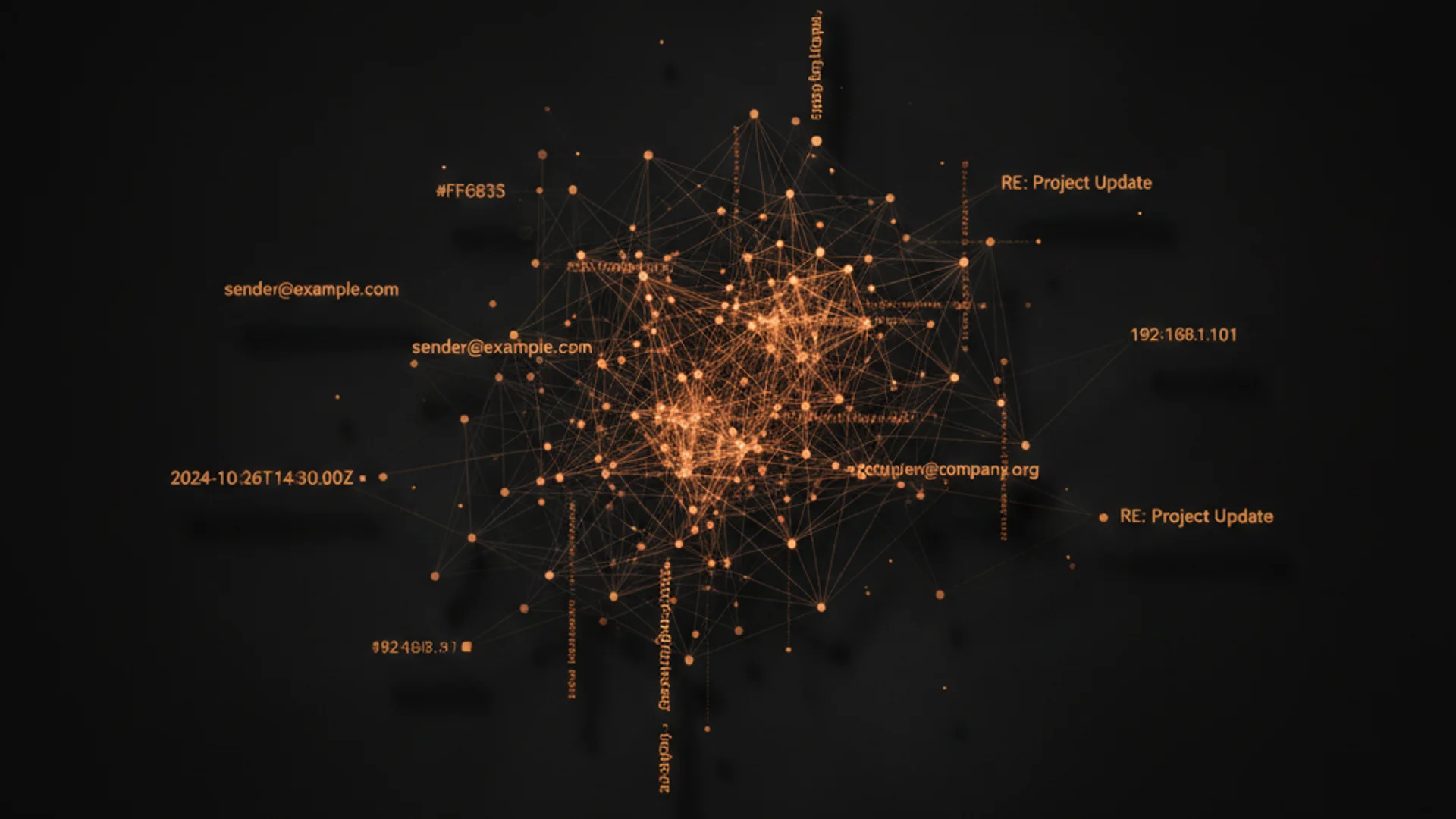
Even when message content is genuinely encrypted end-to-end, there's a parallel information channel that remains completely exposed: metadata. Your emails reveal who you're talking to, when, how often, and from where. Encryption does exactly nothing to protect that. Email metadata includes sender and recipient addresses, timestamps, IP addresses (showing your location), message sizes, and in most implementations, subject lines. As MIT researcher Albert Kwon notes, "The fact that I'm sending someone a message at all is not protected by encryption." That sounds abstract until you understand what intelligence agencies can do with it. Former NSA and CIA director Michael Hayden said it plainly in 2014: the government can often rely solely on metadata to find targets. They don't need to read your messages. Knowing that you emailed a journalist, then a lawyer, then a government oversight contact, all within a three-day window, tells them everything they need to know. The NSA is still gathering metadata through XKEYSCORE and other programs—they're intercepting every email header they can get their hands on. This can be especially dangerous for whistleblowers or people in oppressive regimes talking to journalists. Encryption protects the content, but the pattern of communication itself becomes evidence. Many times, that's all they need to track an individual. The technical reality is that email's fundamental architecture—designed in the 1970s for academic researchers who trusted each other—inherently exposes metadata. It's baked into how email routing works. An email isn't a single piece of data. It's multiple pieces: the message body, the subject line, the From field, the To/CC/BCC fields, and routing metadata that includes where you're sending it from.
Encrypted email providers minimize metadata collection, but "minimize" doesn't mean "eliminate." The protocol itself leaks information by design.
How Often Does This Actually Happen? More Than You Think.
The threat of government access isn't theoretical—it's documented in the transparency reports that providers publish (when they publish them at all). Meta received more than 450,000 government data requests in 2022, covering over 800,000 users. They handed over data 76% of the time globally. In the United States, they complied in 88% of cases. The vast majority of these requests relate to criminal investigations—robberies, kidnappings, fraud. In many cases, agencies are seeking basic subscriber information: name, registration date, IP address, length of service. But the legal framework is the same whether it's a local police department or a national intelligence agency. When the request comes with proper legal authority, providers comply. Countries including Australia, India, and the United Kingdom legally mandate that email providers retain metadata specifically to facilitate government surveillance. It's not a secret program—it's the law. Police can obtain metadata without court authorization in many jurisdictions by monitoring network traffic passively, catching routing information and partially revealing encrypted data using traffic analysis. The 2013 shutdown of Lavabit—Edward Snowden's email provider—showed how far this goes. Rather than comply with secret government demands for access, the service shut down entirely. Silent Circle, another encrypted email provider, shut down preemptively before they were even contacted, recognizing the inevitable legal pressure. These were providers willing to kill their own businesses rather than compromise user privacy. Most aren't willing to go that far. The legal jurisdiction matters, but only to a point. Belgian privacy law is strong—only local judges can request information, and they need a court order. Switzerland offers similar protections.
But legal barriers only work if the provider is willing to fight, relocate, or shut down rather than comply. Most providers will choose survival over principle when the legal hammer comes down.
The Questions That Cut Through the Marketing
When you're evaluating any encrypted email provider, ignore the marketing language and ask these questions: Who holds the encryption keys? If the provider can access your private key, they can decrypt your messages—voluntarily or under compulsion. Gmail offers "client-side encryption" where keys are controlled by the customer and not available to Google servers, but this requires an enterprise account and explicit setup that almost no one uses. What actually gets encrypted? Tuta encrypts the entire mailbox—emails, calendar, address book—end-to-end. The only unencrypted data are the email addresses of senders and recipients, because that's required for routing. That's more comprehensive than most competitors, where subject lines and metadata remain exposed. But even Tuta's encryption only covers internal messages. External recipients require password-based encryption that 96% of users never set up properly. What happens with external recipients? Four percent of Tuta's encrypted emails go to external recipients using password protection. The other 96% are sent to other Tuta users. This creates a security moat—you're only truly protected inside the walled garden. The moment you email someone on Gmail, all bets are off. What does the transparency report show? Providers that publish detailed reports about government requests, compliance rates, and legal challenges demonstrate accountability. Providers that don't publish anything? Assume they're complying quietly. The encryption standards themselves are usually solid. Tuta uses AES 128 combined with RSA 2048. ProtonMail uses AES 256, the gold standard. The cryptographic primitives aren't the problem.
The problem is the implementation layer—the architecture that determines who can access what, and the usability constraints that push providers to make security-reducing compromises so normal humans can actually use the product. That's the devil's bargain: ease of use in exchange for access. You can have email that's truly private, or you can have email that's easy to use. Pick one.
Frequently Asked Questions
Does end-to-end encryption actually protect my emails?
It depends entirely on the implementation. True end-to-end encryption (E2EE) means only you and your recipient hold the decryption keys—no one else, not even the email provider, can read your messages. But most providers that claim E2EE still control your keys, which means they can access your emails voluntarily or when legally compelled. Check who actually holds your private keys. If the answer is "the provider," you don't have real E2EE.
Can the government read my encrypted emails?
If your email provider holds your encryption keys (which most do), they can be legally compelled to hand over your messages or access your keys. In 2022, Meta complied with 88% of US government data requests. Even with genuine E2EE, metadata (who you email, when, and from where) remains exposed and is actively collected by intelligence agencies through programs like XKEYSCORE. Former NSA director Michael Hayden said the government can often rely solely on metadata to find targets—they don't need to read your messages.
What's the difference between ProtonMail, Tutanota, and regular Gmail?
Gmail encrypts your email in transit and at rest, but Google holds all the keys and can read everything. ProtonMail offers end-to-end encryption for messages between ProtonMail users, but doesn't encrypt subject lines. Tutanota (Tuta) encrypts subject lines and uses local key management, but only works fully with other Tuta users. All three expose metadata. The real difference is who can access your content and under what circumstances—with Gmail, it's Google and any government that asks properly. With ProtonMail and Tuta, it's more limited but not impossible.
What is email metadata and why does it matter?
Metadata is everything about your email except the content: who sent it, who received it, when, from what IP address (revealing location), and usually the subject line. Even with perfect content encryption, metadata reveals the pattern of your communications. Intelligence agencies consider this so valuable that the NSA specifically collects email metadata in bulk. For a whistleblower, metadata showing emails to a journalist, then a lawyer, then a congressional staffer is just as damaging as reading the emails themselves.
Is there any email service that's actually private?
No email service offers complete privacy because email's fundamental architecture exposes metadata by design. Services like Tuta and Mailfence come closest by encrypting content including subject lines and using local key management, but they only work fully when both parties use the same service. For communication with external recipients, you're back to password-based encryption that almost no one implements correctly. If you need real privacy, email isn't the right tool—consider encrypted messaging apps like Signal that are designed for confidential communication from the ground up.
What should I do if I'm already using an encrypted email service?
First, verify who holds your encryption keys. Check if subject lines are encrypted. Review the provider's transparency report to see how often they comply with government requests. Understand that even with good encryption, your metadata is exposed. For truly sensitive communications, don't use email at all—use apps like Signal that offer genuine E2EE with minimal metadata exposure. And never put anything in a subject line that you wouldn't want visible to your provider, their government, or anyone with a legal warrant.
Why is email encryption so hard to get right?
Because there's a fundamental conflict between security and usability. True end-to-end encryption requires users to generate, store, and manage cryptographic keys—something Carnegie Mellon researchers proved in 1999 and again in 2007 that most people can't do correctly. So providers face an impossible choice: implement real encryption and watch users fail, or simplify the experience by holding the keys themselves and sacrifice actual security. Most choose the second option and hide it behind the word "encrypted" in their marketing.
Conclusion
The uncomfortable truth is that email itself—designed in the 1970s for open academic collaboration—might be fundamentally unsuited for confidential communication in an era of mass surveillance and legal data access regimes. The word \"encrypted\" has become meaningless marketing language without understanding the complete technical architecture: who holds keys, what data gets encrypted, what metadata remains exposed, and under what legal jurisdiction the provider operates. If you're using ProtonMail, Tutanota, or any other "encrypted" email service, go check their technical documentation right now. Find out who holds your private keys. See if subject lines are encrypted. Read their transparency report. Look at what metadata they collect and retain. Then decide if that matches what you thought you were getting. For truly sensitive communications, consider whether email is the right tool at all—or whether you should be using something built for privacy from the ground up. And if you want technology that actually works for you instead of surveilling you, that's what we're building at SurvivalBrain: an offline AI system that keeps your data on your device, not on someone else's server waiting for a government data request. Join the waitlist at https://survivalbrain.ai/#waitlist and get $50 off when we launch in Q1 2026.
Get Early Access to Uncensored Offline AI
Join the waitlist for SurvivalBrain launching Q1 2026. Early supporters lock in $149 lifetime pricing (save $50).
Lock In $149 Pricing