Every Car Made After 2020 Has a Permanent Cellular Connection That Can't Be Turned Off: What Your Vehicle Reports About You

Introduction
Kenn had been driving for over forty years without an accident. Clean record, no tickets, no claims. The kind of driver insurance companies allegedly love. Then his premium jumped 21%. No explanation, no warning—just a bill that assumed he'd quietly pay it. He didn't. When he finally dragged the truth out of LexisNexis through a formal data request, he found a 258-trip surveillance log his leased Chevrolet Bolt had been compiling and selling behind his back. Every trip. Every time he accelerated too quickly pulling onto the highway. Every instance of hard braking to avoid some asshole who cut him off. All of it recorded, packaged, sold to a data broker, and handed to insurance companies who used it to justify bleeding him for another $400 a year. Romeo Chicco got it worse. Seven insurance companies rejected him outright before he found one willing to cover him—at nearly double his previous rate. His crime? Driving a 2021 Cadillac XT6 that snitched on him every three seconds. His LexisNexis report read like a stalker's diary: 411 trips, timestamps, distances, speeds, every moment of "aggressive" driving (which, according to the insurance algorithm, includes shit like accelerating onto a freeway or braking when someone runs a red light). This isn't some dystopian future-tech. It's already here, in your driveway, running quietly in the background of every car made after 2020. The cellular modem can't be turned off through any menu. The "privacy settings" in your infotainment screen are decorative. Your car is a data-harvesting appliance that just happens to also drive, and unless you physically intervene, every trip you take is being documented, sold, and used against you. Here's what your vehicle is actually reporting, who's buying it, and what you can do in the next ten minutes to start taking your privacy back.
What Your Car Is Actually Reporting (And How Often)
Let's start with the technical reality, because the scope of this is worse than most people assume. According to FTC Chair Lina Khan, General Motors collected geolocation data "sometimes as often as every three seconds." Not every trip. Not every ten minutes. Every. Three. Seconds. That's not monitoring—that's a ankle bracelet. Here's what's getting logged and transmitted from the average modern vehicle: precise GPS coordinates, vehicle speed, date and time of every trip, trip duration and distance, hard braking events, rapid acceleration, late-night driving patterns, seatbelt usage (driver and passenger), and in some cases—according to recent lawsuits against Toyota—image and voice data. The Texas Attorney General's lawsuit against Allstate and Arity revealed the specific data format: "the date, start time, end time, vehicle speed, driver and passenger seatbelt status, and distance driven each time a customer drove their GM vehicle." Every trip. Automatically. Without asking. The transmission happens through an embedded LTE cellular modem—essentially a smartphone chip hardwired into your vehicle's electrical system, usually called a Telematics Control Unit or TCU. Every major manufacturer has their own branded version: GM's OnStar, Toyota Connected Services, Ford SYNC, Nissan Connect, Mercedes "me connect." Different names, same function. They're always on, always transmitting, and they draw power directly from your vehicle's electrical system. You didn't activate them—they came active from the factory. Verisk, one of the major data brokers in this space, brags that they have access to "telematics data from millions of connected vehicles" from automakers that "represent nearly 50% of new vehicle sales in the U.S.," including GM, Honda, Hyundai, and Ford. That data doesn't sit on a server gathering dust.It gets packaged, sold to insurance companies, data brokers like LexisNexis, and made available to law enforcement. Some automakers admitted to senators that they'll hand over your location data with nothing more than a subpoena—a piece of paper law enforcement can issue without a judge ever seeing it (Toyota, Nissan, Subaru, Volkswagen, BMW, Mazda, Mercedes-Benz, and Kia all confirmed this practice). And if you're thinking "well, I never signed up for any of this"—you're right. You didn't. But you probably did click "Agree" on a 50-page terms-of-service document when you paired your phone or set up the infotainment system. That agreement, buried somewhere around page 37, contained legal language about "vehicle data collection" and "service improvements" and "partner integrations." One driver discovered their husband had opted out through the smartphone app, but the website had a completely different opt-out screen that wasn't synced—so their data got collected anyway. The consent is theatrical. The collection is real.
Your 5-Minute Privacy Win: Find Out What Your Specific Car Is Collecting
Before you start pulling fuses or digging through dashboard trim, you need to know what you're dealing with. Not all vehicles collect the same data, not all manufacturers sell it to the same brokers, and some vehicles have software-based opt-outs that actually work (rare, but they exist). This step takes five minutes, requires zero tools, and gives you the information you need to make an informed decision about what comes next. Go to Privacy4Cars' free lookup tool (privacy4cars.com). Enter your Vehicle Identification Number—that's the 17-character code on your dashboard, visible through the windshield on the driver's side, or printed on your registration. The tool pulls up your automaker's official data privacy practices: what data your specific make and model collects, whether it's shared with insurers, whether it's sold to data brokers, and whether law enforcement can access it (and under what conditions). This isn't a theoretical exercise. You're looking for specific things: does your car collect location data? Does it share driving behavior data with third parties? Does your manufacturer require a warrant for law enforcement access, or do they hand it over with just a subpoena? Write that shit down. Screenshot it. You're building a map of who has access to your life. Next, check if you have an active telematics account you didn't know about. Log into your vehicle manufacturer's app or website (the one you might've set up when you bought the car, or maybe never touched). Look for sections labeled "Privacy," "Data Sharing," "Connected Services," or "Consent Preferences." Toyota calls it "Master Data Consent." Ford buries it in dashboard settings. GM hid it in OnStar account settings.If you find an opt-out toggle, screenshot it in both positions—on and off—because as that New York Times investigation found, these systems are sometimes out of sync between the app and the website. Now you know what you're dealing with. If your report shows minimal data collection and you found a working opt-out, you might be done. If it shows your car is feeding a constant stream of location and behavior data to insurance brokers and your manufacturer admits they'll hand your location to cops without a warrant—well, now you know why your insurance went up, and you can decide how much further you want to go. This step matters because everything else—fuse pulling, modem disconnection, buying a different vehicle—comes with tradeoffs. You can't evaluate those tradeoffs without knowing what you're actually trading away.
The Fuse Pull: How to Disable Telematics Without Disassembling Your Dashboard
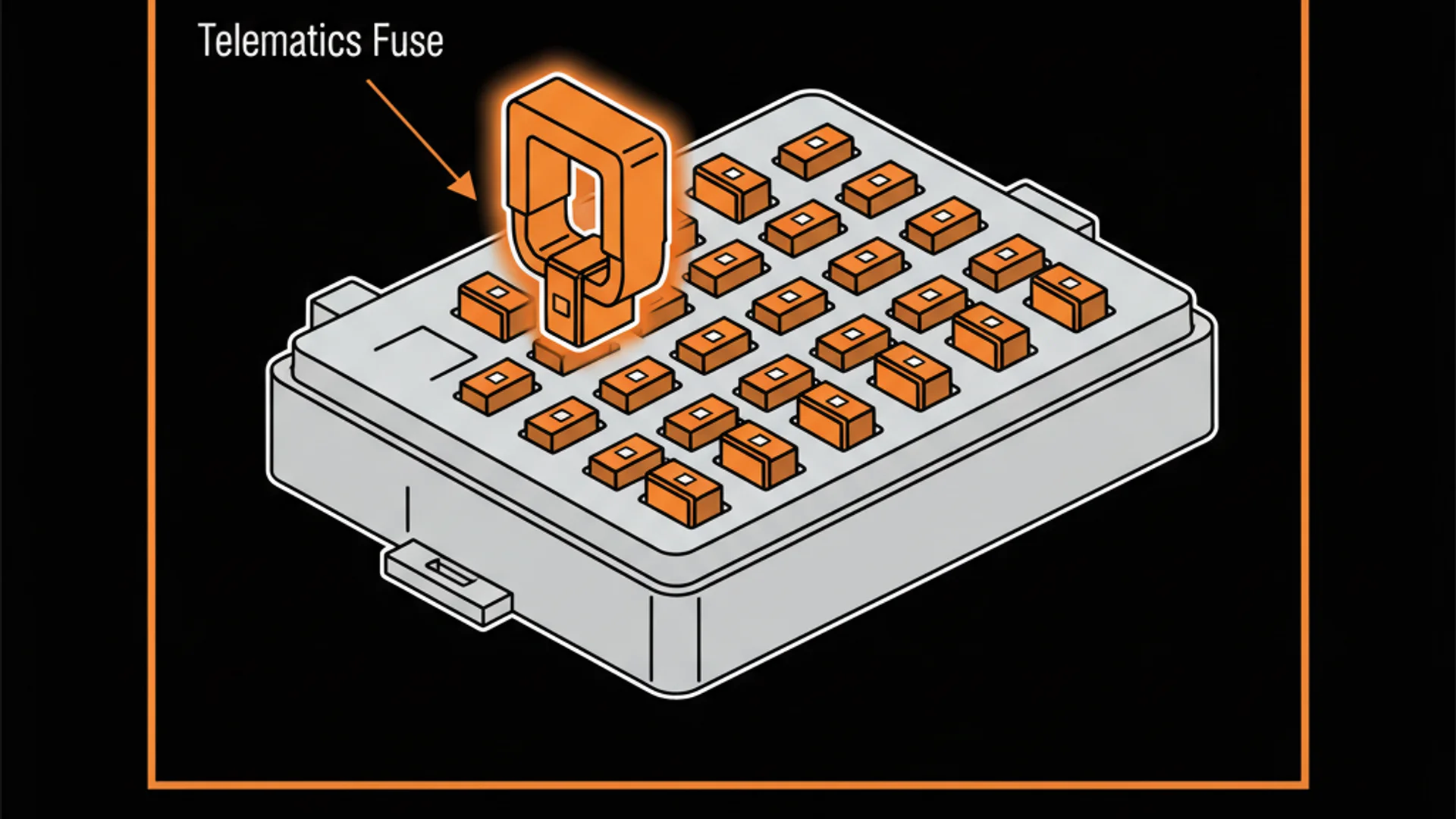
If the software opt-outs are bullshit (and they usually are), the fastest hardware solution is cutting power to the Telematics Control Unit. No power, no transmission. The TCU is connected to a cellular antenna, and if the module isn't receiving power, it can't send data. This doesn't require disassembly, doesn't involve cutting wires, and is completely reversible—if you need to re-enable it for a software update or a warranty service appointment, you just pop the fuse back in. Here's how to find the right fuse. Grab your vehicle's owner's manual (or download the PDF from the manufacturer's website—search "[your make/model/year] owner's manual PDF"). Flip to the section on fuses, usually labeled "Fuse Box Locations" or "Electrical System." You're looking for anything labeled "Telematics," "TCU," "OnStar," "Connected Services," or the name of your manufacturer's specific system. In a Mustang, it's fuse #10, labeled "Telematics." In a Chevy Bolt, it's fuse #31, labeled "OnStar." In a Ram, owners report success pulling the fuse labeled "UC4 Modem." Locate your fuse box—most vehicles have one under the hood and one inside the cabin, usually beneath the dashboard on the driver's side or behind a panel near the door. The owner's manual will have a diagram showing you exactly where it is. Pop the cover off (they usually just clip on and off). Inside, you'll see rows of colored fuses, each one corresponding to a number. Match the number from the manual to the fuse in the box. Pull the fuse. Most fuse boxes include a small plastic fuse pullerclipped inside the cover—it looks like tweezers. Grab the fuse firmly and pull straight out. If you don't have the tool, needle-nose plierswork. Put the fuse somewhere safe (not loose in a drawer where you'll lose it—tape it to a page in the owner's manual or stick it in a labeled envelope in your glovebox). Done.Your car can no longer transmit data. Now the tradeoffs, because this isn't free. Pulling the telematics fuse will kill anything that routes through that system. In the Chevy Bolt, killing fuse #31 also disables the compass and the built-in microphone, so you lose Bluetooth calling through the car's speaker system (you can still use your phone's speaker or separate Bluetooth earbuds). In some vehicles, GPS navigation stops working—not because GPS requires the internet, but because manufacturers deliberately routed GPS through the cellular modem to create exactly this dependency. One Ram owner discovered they couldn't update the infotainment system without the modem, and their navigation quit working because the system was pinging cell towers instead of using a standalone GPS receiver. You'll also lose any features that actually depend on connectivity: remote start through the app, stolen vehicle tracking, automatic crash notification, over-the-air software updates, and remote diagnostics. For some people, that's a relief. For others—especially if you live somewhere remote, or if you have a medical condition where automatic crash notification could save your life—that's a significant safety tradeoff. You need to decide whether those features are worth letting your car snitch on you every three seconds. Will this void your warranty? Probably not entirely—but it's complicated."Very few things actually void a warranty"—that's mostly reserved for salvage titles or vehicles caught being raced—but if you modify something and later file a warranty claim, the manufacturer can deny the claim if they decide your modification contributed to the failure.If you pull the telematics fuse and six months later your transmission fails, that claim should still be covered—they're unrelated systems.But if your infotainment screen glitches out or your telematics system itself fails, they'll likely deny the claim and point to the missing fuse. For most disconnects (like SYNC 3 in Ford vehicles), you lose app features but nothing connected to the powertrain, HVAC, or windows. SYNC 4 and similar "deeply integrated" systems are trickier, because they're wired into other control modules, and manufacturers are starting to tie over-the-air updates to warranty coverage. Document everything. Before you pull the fuse, take a photo of the fuse box with all fuses in place. After you pull it, take another photo. If you ever need to prove the modification didn't cause a failure, you'll have a record. And if you need to take the car in for service, you can pop the fuse back in temporarily, get the service done, and pull it again when you leave.
The Nuclear Option: Physically Disconnecting the Modem (And Why You Might Not Want To)
If pulling a fuse feels too reversible—if you want the telematics system not just unpowered but physically incapable of transmitting—you can disconnect or remove the modem itself. This is more invasive, not easily reversible, and will likely trigger warning lights on your dash. But it's the closest you can get to a permanent solution without buying a different vehicle. The Telematics Control Unit is a physical module, usually about the size of a deck of cards, tucked somewhere behind the dashboard or under a seat. In GM vehicles, it's an LG-manufactured module, model TTA20ANEBN, which handles both 4G LTE and GPS signals. In some Subarus, owners report finding it under the passenger seat. In others, it's buried behind the center console or integrated into the infotainment head unit itself. The location varies wildly by make, model, and year—you'll need to search for "[your make/model/year] telematics control unit location" in enthusiast forums or service manuals to find yours. Once you've located it, the process is straightforward but tedious: remove the trim panels or seats blocking access (this usually involves prying off plastic clips—go slow, they break easily), locate the module, and disconnect the antenna leads. Most TCUs have two or three antenna connectors: one for cellular (LTE), one or two for GPS. Disconnect them. Some owners go further and unplug the module's main power connector or pull the entire unit out. If you only disconnect the antennas, the module may still draw power trying to find a signal—one Subaru owner noted that the "telematics unit may draw power longer when shut off," which can theoretically contribute to battery drain over weeks of sitting. The workaround is pulling the fuse in addition to disconnecting the antennas, or wiring a bypass so the unit only receives power when the vehicle is running.The consequences of a full physical disconnect are more severe than a fuse pull. You'll lose everything that routes through that system: GPS navigation, remote features, crash notification, stolen vehicle tracking, any infotainment features tied to connectivity, and—most critically—over-the-air software updates. Modern vehicles increasingly rely on OTA updates to fix bugs, patch security vulnerabilities, and even unlock features. If you physically disconnect the modem, you're opting out of that entirely. You'll have to bring the vehicle to a dealership for software updates, and if the manufacturer ties a safety recall or warranty coverage to having the latest software, you've just created a massive headache for yourself. There's also the "Massachusetts option"—a hidden engineering menu some vehicles have because of that state's right-to-repair laws. Due to those laws, manufacturers were required to include a way to disable telematics in vehicles sold there. One Kia owner discovered that "a few lines below the greyed-out 'modem on/off' selection there is a 'telematics on/off' section" specifically for Massachusetts variants. Accessing this requires entering your vehicle's hidden engineering or service mode, which varies by manufacturer. For some Kias, it involves holding specific buttons on the infotainment screen during startup. For others, it requires a sequence of ignition key turns or pressing hidden touchscreen zones in a particular order. Search for "[your make/model] engineering mode" or "service menu access"—if it exists for your vehicle, someone in an enthusiast forum has documented it. Warranty implications for physical disconnection are murkier and riskier than a fuse pull. You're not just temporarily disabling a system—you're physically altering the vehicle's wiring or removing a factory-installed component.If you bring your car in for service and a technician sees dangling antenna leads or a missing module, that's going on your service record. Any future claim involving the electrical system, infotainment, or connected features will likely be denied. And if your state requires vehicles to pass a diagnostic check for registration or emissions, a missing or disabled module might trigger a "readiness monitor" failure that prevents you from renewing your plates. This path makes sense for someone who's technically comfortable, who doesn't care about losing connected features, who's willing to accept potential warranty and registration complications, and who views the surveillance as a threat serious enough to justify all of that. For most people, it's overkill. But if you're someone with a stalker ex who works in law enforcement, or someone whose work involves sensitive travel, or someone who just refuses to drive a corporate snitch on principle—this is how you kill it.
The Only Guaranteed Solution: Buy a Dumber Car
If you're not willing to accept the tradeoffs of disabling telematics in a modern vehicle—or if you just want transportation that doesn't require an ongoing technical battle with the manufacturer—the most reliable solution is buying a vehicle made before this surveillance infrastructure became standard. Vehicle telematics systems started appearing in luxury cars in the mid-2000s (OnStar launched in 1996, but widespread adoption didn't happen until much later), became common around 2010-2015, and became nearly universal after 2020. If you buy something made before 2015, you're likely clean. Before 2010, you're almost certainly clean. This doesn't mean the vehicle collects zero data. Most cars made after the mid-2000s have an Event Data Recorder (EDR)—basically a "black box" that logs data during crashes or hard braking events. But EDRs store data locally. They don't transmit it. To access EDR data, someone needs physical access to the vehicle and specialized equipment to download it. That's a completely different threat model. You're safe from insurance companies buying your trip logs in bulk. You're safe from your ex's buddy in the police department pulling your location history on a whim. But if you're in a serious crash, that data can still be subpoenaed and used in court. The tradeoffs are real and they matter. Older vehicles lack modern safety features: no automatic emergency braking, no lane-keep assist, no blind-spot monitoring, less advanced airbag systems, weaker crash structures. They require more frequent maintenance. Parts are harder to find for some models. Fuel economy is generally worse. You're giving up a decade or more of engineering improvements in efficiency, comfort, and safety. And if you live somewhere that requires emissions testing or safety inspections, an older vehicle might not pass without repairs.But here's what you gain: the vehicle answers to you, not a data broker. When you drive it, you're just driving—not generating a product that gets sold to insurance companies. There's no app for your car because the car doesn't have a modem. It can't receive "over-the-air updates" that quietly change how it behaves or what it reports (Tesla famously reduced vehicle range via software update during a hurricane evacuation, proving they can remotely alter your car's capabilities whenever they decide it's justified). No manufacturer can brick features you paid for because you missed a subscription payment. No insurance company can retroactively analyze your driving and decide you're suddenly high-risk because their algorithm didn't like how you took that turn last Tuesday. If you go this route, do your research. Look up reliability ratings for the specific make, model, and year you're considering—some older vehicles are bulletproof, others are money pits. Budget for maintenance. Get a pre-purchase inspection from an independent mechanic (not the dealership selling it). And check your state's inspection requirements to make sure the vehicle you're looking at will actually pass. The most common criticism of this approach is that it's "regressive"—that you're giving up safety to avoid surveillance. That's partially true. But it's also true that people drove for decades without these systems and survived just fine. The question is whether the marginal safety improvement of modern driver-assist systems is worth letting a corporation track your every movement and sell that data to anyone willing to pay for it. For some people, the answer is yes. For others, the calculation is different. There's no universal right answer, but there is a choice—and right now, most people don't even realize they're making it.
What Happens to the Data (And Why It's Not Just About Insurance)
Let's follow the data after it leaves your car, because the insurance companies are just the most visible buyers—they're not the only ones. When your vehicle transmits a trip record, it goes to the manufacturer's servers first. From there, it gets packaged and sold to data brokers like LexisNexis, Verisk, and Arity. Those brokers don't just sit on the data—they resell it. Insurance companies are the loudest customers because they use it to set your rates, but they're not alone at the table. Marketing agencies buy driving pattern data to target ads. If your car is regularly parked near a gym, you start seeing supplement ads. Parked at a hospital frequently? Pharmaceutical ads. Parked near a family planning clinic? That data has gotten people fired, stalked, and harassed. Location data brokers like SafeGraph and Placer.ai sell "mobility insights" to anyone willing to pay—hedge funds analyzing retail traffic, political campaigns tracking which neighborhoods to target, researchers building "anonymized" datasets that are trivial to de-anonymize once you cross-reference them with other data sources. Law enforcement buys access too, either directly from brokers or via subpoenas to manufacturers. As noted earlier, eight major manufacturers admitted they'll hand over location data to police with just a subpoena—no judge, no warrant, no probable cause hearing. That data can show where you were at a specific time, how fast you were going, whether you were wearing a seatbelt, and in some cases (according to the Texas lawsuit against Toyota) image and voice data from cabin microphones and cameras. If you attended a protest, visited a abortion provider, met with a journalist, or parked near a location later tied to a crime, that data exists and is accessible. The retention period varies by company, but it's long.LexisNexis reports seen by affected drivers contained six months of trip data, but the data itself is often stored much longer—sometimes years. And once it's sold to a broker, the manufacturer has no control over how long that broker retains it, who they resell it to, or how it's used. The Texas AG's lawsuit alleged that Allstate and Arity collected data from over 45 million Americans. That data didn't evaporate after six months. It's sitting in databases, getting cross-referenced with other datasets, being resold to whoever wants to buy access. Then there's the accuracy problem. Nearly 60% of drivers worry that their driving data might not be accurately collected. They're right to worry. Telematics systems log "hard braking" and "rapid acceleration" based on G-force sensors and accelerometers, but those sensors don't understand context. Swerving to avoid a deer looks identical to "aggressive driving" in the data. Braking hard because someone ran a red light gets logged the same as intentional reckless driving. Accelerating onto a freeway to match traffic speed can trigger a "rapid acceleration" flag. The insurance algorithm doesn't care. It just sees the events and adjusts your rate accordingly. And you usually can't contest it effectively. When Kenn and Romeo Chicco tried to fight their rate increases, they hit a wall—insurance companies claimed the data came from the vehicle manufacturer and data brokers, so they were just using "objective" information. The manufacturers said they were just reporting what the sensors logged. The brokers said they were just aggregating what the manufacturers sent. Everyone pointed at someone else, and meanwhile the drivers were stuck with higher rates based on data they never knew was being collected, sold by companies they never agreed to do business with, and used in ways they had no opportunity to challenge.The financial incentive structure guarantees this gets worse, not better. At the end of 2022, there were 16.8 million active telematics insurance policies in the U.S. That number is projected to hit nearly 30 million, growing at about 12% per year. Insurance companies are pushing these programs hard—sometimes offering initial discounts to get people enrolled, then using the data to raise rates later. And the manufacturers are getting paid twice: once when you buy the car, again when they sell your data. GM's data-sharing deal with LexisNexis reportedly earned them millions before the FTC stepped in. There's no incentive for any party in this chain to stop unless regulators or lawsuits force them to. So when you're deciding whether to pull that fuse or disconnect that modem or buy an older car, you're not just deciding whether your insurance company gets to see your driving habits. You're deciding whether you want to generate a permanent, sellable, subpoena-able record of everywhere you go, everyone you visit, and every trip you take. That's the actual stakes.
Frequently Asked Questions
Will pulling the telematics fuse void my entire car warranty?
No—despite what dealerships might imply, pulling a fuse doesn't void your entire warranty. Warranty law (specifically the Magnuson-Moss Warranty Act) says a manufacturer can only deny a claim if your modification actually caused the failure. If you pull the telematics fuse and your transmission fails six months later, those are unrelated systems—the claim should be covered. However, if your infotainment system glitches or anything connected to the telematics module fails, they can deny that specific claim and point to the missing fuse. The key is documentation: photograph the fuse box before and after, and keep records. If you need to take the car in for service, you can temporarily reinstall the fuse, get the work done, and pull it again afterward.
Can I get in legal trouble for disabling the telematics system in my own car?
No. You own the car (or you're leasing it, which gives you legal possession). There's no federal or state law that requires you to keep the telematics system active. You're not disabling a federally-mandated safety system like airbags or emissions controls—you're disabling a data collection and transmission system. The closest gray area is if disabling it violates your lease agreement (some leases require you to keep manufacturer systems functional), but even then, the penalty would be a contract dispute, not a criminal issue. The bigger risk is warranty coverage and potential issues with over-the-air updates that some manufacturers are starting to tie to vehicle functionality.
If I bought my car used, is it still tracking me, or does that only apply to the original owner?
It's still tracking you. The telematics system doesn't care who owns the vehicle—it just keeps transmitting data as long as it has power. When you buy a used car, the previous owner's account with the manufacturer (OnStar, Toyota Connected Services, etc.) might get deactivated, but the hardware keeps running and the data keeps flowing to the manufacturer. In fact, used car buyers are often in a worse position because they're less likely to have gone through the initial setup process where data collection consent is buried, so they have no idea it's happening. Run your VIN through Privacy4Cars to see what your specific vehicle is collecting, regardless of whether you're the first owner.
I never signed up for OnStar or any connected services—does that mean my car isn't collecting data?
Unfortunately, no. Not signing up for the branded service (OnStar, Toyota Connected Services, etc.) means you're not using the features—remote start, roadside assistance, stolen vehicle tracking—but the data collection and transmission happens regardless. The telematics hardware is installed and active from the factory. Even if you've never opened the app or created an account, the module is still transmitting vehicle data to the manufacturer. What you signed up for is the consumer-facing service layer. What's running in the background is the data collection layer, and that doesn't require your active participation—just your buried consent in the purchase or lease agreement.
How do I know if my insurance company is using telematics data to set my rates?
Request your consumer disclosure report from LexisNexis (through their website or by mailing a formal request under the Fair Credit Reporting Act), Verisk, and any other data brokers. This is the same type of request Kenn and Romeo Chicco used to discover their data. LexisNexis is required to provide this for free once per year. If a report exists, it'll show trip logs, driving behavior scores, and which companies have accessed your data. You can also directly ask your insurance company whether they use telematics data in your rate calculation—they're required to disclose the factors they use, though they'll often give vague answers. If your rate increased without an obvious reason (no accidents, tickets, or claims), telematics data is a likely culprit.
What's the oldest model year I can buy and be confident it doesn't have built-in telematics?
Vehicles made before 2010 are generally safe. Between 2010 and 2015, telematics started appearing in more models but wasn't yet universal—you'd need to check the specific make and model. After 2015, it becomes increasingly common, and after 2020, it's essentially standard across all new vehicles. Luxury brands adopted it earlier (OnStar launched in 1996 in Cadillacs, but didn't become widespread until much later). To be certain about a specific vehicle, search for "[year/make/model] telematics" or "connected services" and check whether the vehicle has an embedded cellular modem. If it has no modem, it can't transmit data. It might still have an Event Data Recorder (black box) that stores crash data locally, but that requires physical access to download—it's not being transmitted to manufacturers or sold to brokers.
Can I just wrap the antenna in foil or put the car in a Faraday cage to block the signal?
Technically yes, practically no. Wrapping the telematics antenna in foil or using RF-blocking material could prevent signal transmission, but you'd need to identify the correct antenna (most vehicles have several—for radio, GPS, cellular, satellite, etc.) and access it, which often requires disassembly. Even if you block the signal, the telematics module will keep trying to connect, potentially draining your battery faster, and it'll log all the data locally. The moment the signal blockage is removed—say, during service at a dealership—all that stored data gets transmitted in a batch. You'd also likely trigger warning lights and errors. If you're going to go through the effort of accessing the antenna, you're better off just disconnecting it entirely or pulling the fuse. The Faraday cage approach is clever in theory but impractical and unreliable in practice.
Conclusion
You're not paranoid. Your car is surveilling you. It's collecting detailed data on everywhere you go, how you drive, who's in the vehicle with you, and in some cases what you say and what the cabin cameras see. That data is being sold to insurance companies who use it to raise your rates, data brokers who resell it to whoever wants it, and made available to law enforcement who can access it with less legal scrutiny than a warrant requires. This isn't a glitch or an edge case—it's the business model. Eighty to ninety percent of new vehicles sold in the U.S. include this surveillance infrastructure by default, and the percentage is climbing. But you have options, and they start with the decision you make in the next five minutes. Check what your vehicle is actually collecting using the Privacy4Cars tool. Look up your telematics fuse. Decide whether the convenience of connected features is worth the permanent record of your life they require. If you're shopping for a vehicle, consider whether you actually need a 2024 model, or whether a well-maintained 2012 does everything you need without the corporate snitch riding shotgun. These systems only work because most people don't know they exist. Now you know. What you do about it is up to you—but at least now you're making the choice instead of having it made for you. And if you want tools that work offline, that don't phone home, that treat your data like it belongs to you—systems designed for a world where privacy isn't a marketing gimmick—check out SurvivalBrain at https://survivalbrain.ai/#waitlist. Because the grid, the cloud, and the cellular network shouldn't be the price of admission for using your own tools.
📚 Sources
- [1] FTC enforcement action press release (April 2025)
- Establishes official government findings on GM data collection practices, specific collection frequency, and penalties imposed
- [2] Texas Attorney General lawsuit filings (2024-2025)
- Documents specific data types collected, scale of collection (45M+ Americans), investigation of multiple manufacturers
- [3] Class action lawsuits (Chicco v. GM, Texas v. Toyota/Progressive)
- Provides real-world impact stories and legal theories around privacy violations
- [4] Actuarial Review Magazine (Nov 2024)
- Details insurance industry perspective, enrollment practices, opacity issues
- [5] National Law Review articles
- Explains legal framework, state legislation, dealer responsibilities
- [6] Insurance Business America
- Telematics market size and growth projections
- [7] Mozilla Foundation study
- Comprehensive review of 25 car brands' privacy practices
- [8] Privacy4Cars/Andrea Amico
- Practical tools for checking vehicle data collection
- [9] Surveillance Technology Oversight Project
- Technical breakdown of data collection systems
- [10] New York Times investigations (2024)
- Original reporting on hidden data sharing, consumer stories
- [11] Bankrate, AutoInsurance.com
- Consumer survey data on privacy concerns and telematics adoption
- [12] Enthusiast forums (Mustang6G, 5thGenRams, ChallengeTalk, KiaNiro, Lincoln, Subaru Outback, Chevy Bolt forums)
- Real-world documentation of disable methods, fuse locations, warranty experiences, technical specifications of TCUs
Get Early Access to Uncensored Offline AI
Join the waitlist for SurvivalBrain launching Q1 2026. Early supporters lock in $149 lifetime pricing (save $50).
Lock In $149 Pricing