Why Your Backup Generator Will Get You Robbed: The Sound That Advertises You Have Power, Food, and Supplies
Introduction
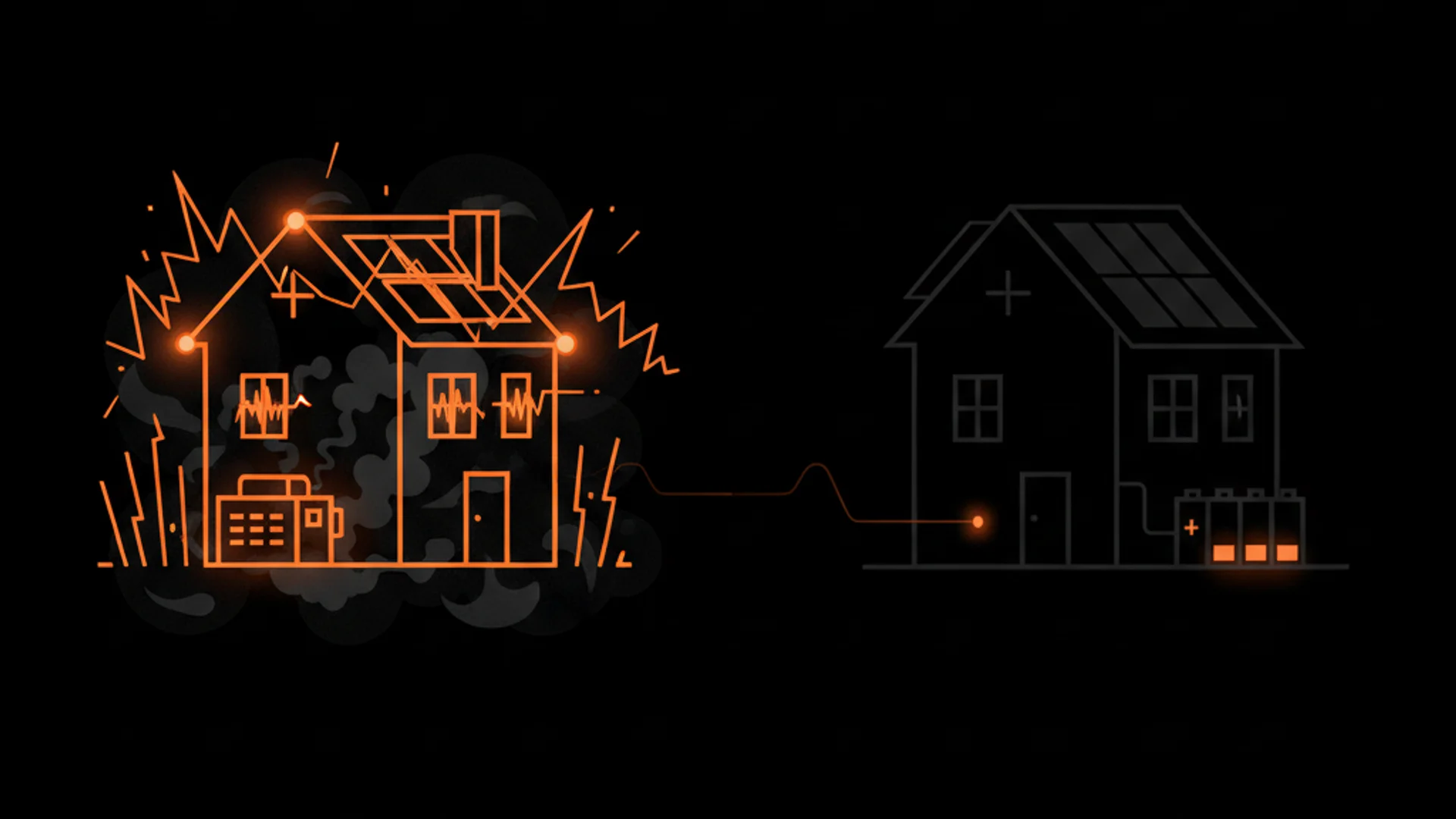
Your generator is a homing beacon. That's the thing nobody tells you when you're shopping for backup power—the same machine that keeps your fridge running and your sump pump working is also announcing to everyone within three blocks that you planned ahead. That you have fuel. That you have supplies. That your house is the one worth visiting when things get worse. This isn't hypothetical threat-modeling. After Texas Snowmageddon knocked out the grid in 2021, acoustical engineering firms got flooded with calls from people who'd survived on generator power—and then realized, after a day or more of continuous operation, just how LOUD these things actually are. One generator outside your home is loud. Imagine ten of them outside a hospital window. Now imagine yours is the only one still running on day four. The security calculation is brutal in its simplicity. Your generator tells potential threats three things simultaneously: you prepared when they didn't, you have resources they need, and you're advertising exactly where those resources are located. In stable times, that's a noise complaint. In a prolonged grid-down scenario, it's a tactical vulnerability you probably didn't account for.
The Sound of Having What Others Don't

Power outages don't just kill your lights—they kill your security infrastructure. When the grid drops, so do your cameras, your smart locks, your alarm systems, all the invisible defensive perimeter you've been paying monthly subscriptions to maintain. Darkness doesn't just inconvenience you; it exposes you. And then you fire up your generator. The acoustic signature of a traditional portable generator is conversation-disrupting. We're not talking about ambient hum—we're talking about a constant mechanical roar that carries across entire neighborhoods when everything else has gone silent. When your neighbors' houses sit dark and quiet, your generator becomes the loudest thing in a four-block radius. It's an advertisement you can't turn off as long as you want power. This isn't paranoid prepper fantasy—this is how sensitive government facilities think about backup power. When electrical engineers design redundancy for critical infrastructure, they're told to hide the generators. Not for aesthetics. For operational security. Because an obvious and easily accessible generator becomes a high-value target during civil unrest or extended disaster scenarios. What applies to government installations applies to your house when social cohesion starts fracturing on day three of no power. The threat model shifts depending on duration. A three-hour outage? You're fine. A three-day outage in winter when people's pipes are freezing and their kids are cold? Now you're the house with heat. A three-week grid failure when supply chains have collapsed and fuel is worth more than cash? Your generator noise is telling people exactly where to find both fuel and someone who had the resources to stockpile it. The same foresight that keeps you alive also paints a target on your roof.And here's the part that makes this worse: you can't turn it off without losing the thing you bought it for. You need to run the fridge or you lose your food. You need to run the sump pump or your basement floods. You need to run the heater or your family freezes. So you're stuck in a tactical bind—the tool that provides resilience also compromises your security, and you don't get to opt out of that tradeoff once the crisis has already started.
What You Can Do Right Now (24-48 Hour Actions)

If you already own a generator, you need to know how loud it actually is from street level. Go turn it on, walk two blocks in every direction, and listen. Not from your backyard—from the street. From your neighbor's driveway. From the sidewalk where someone walking past would hear it. If you can clearly identify your house by sound alone, so can everyone else. Immediate option one: distance and placement. You can move your generator farther from your house using a long, heavy-duty extension cord. Place the exhaust side facing away from your house and away from the street. If your model allows it, point the exhaust pipe upward to direct noise skyward instead of horizontally across the neighborhood. Put the generator on grass or dirt, or use a rubber mat underneath—hard surfaces like concrete or asphalt amplify the vibrations from the metal housing, making it louder. These changes cost you nothing except fifteen minutes of setup time and they can cut your acoustic signature significantly. Immediate option two: run-time strategy. If you're in a scenario where you need power but not continuously, run the generator during daylight hours when ambient noise provides acoustic cover. Charge battery banks or power-station units during the day, then run critical loads off batteries at night when the neighborhood goes silent. This cuts your audible signature from 24 hours to maybe 6-8 hours, and those hours happen when lawnmowers, traffic, and other generators (if any) are already creating noise. If you're shopping for a generator right now and haven't bought yet, get an inverter generator instead of a traditional portable. Inverter models throttle up and down to match demand instead of screaming at full power constantly, and they have better exhaust systems. They cost more—$500 to $4,000 depending on wattage—but the noise reduction is substantial.You're not buying a luxury feature. You're buying the ability to run power without announcing it to everyone in earshot. Write down your wattage requirements today. A refrigerator takes about 600 watts. A sump pump needs 750-1,500 watts. A portable heater pulls 1,500 watts. Lights vary from 60 to 600 watts depending on how many you're running. According to Consumer Reports, a typical home needs about 5,000 watts to cover the basics. Know your number so you're not guessing in a parking lot during a panic-buy.And if you can meet your needs with a smaller, quieter unit instead of oversizing, that's a tactical advantage.
Soundproofing: Making Your Generator Shut Up
If you're committed to a traditional fuel-powered generator, sound suppression is your next move. A basic noise barrier will cut 15-20 decibels off your generator's output. Add acoustic absorption material inside the enclosure and you gain another 5-7 decibels. That's not incremental improvement—a 20-decibel reduction is the difference between hearing it from three blocks away versus hearing it from across the street. Commercial solutions exist and they actually work. The Echo Barrier M1 generator sound barrier is purpose-built for portable generators and cuts noise by up to 38 decibels. User testimonials aren't marketing fluff—one buyer reported a 75% noise reduction, noting you can stand next to the box with the generator under load and hold a normal conversation. If you're willing to spend money to solve this problem, these products deliver. DIY enclosures are buildable if you understand the constraints. You're constructing a box using medium-density fiberboard (MDF) sized to your generator, lined with acoustic materials like Rockwool RW5, Tecsound 50 adhesive membrane, or 6mm acoustic rubber underlay. The principle is simple: trap the sound, absorb the vibrations, block the transmission. The execution is less simple because you're fighting thermal physics. Generators produce enormous heat. If you build an enclosure too tight, you'll overheat the unit, damage the engine, or start a fire. You need adequate airflow, which means ventilation gaps, which means sound leakage. Add extra height and width so the generator isn't pressed against the walls. Account for the thickness added by insulation and soundproofing layers. The better you contain the sound, the more carefully you need to manage heat dissipation. This is the inherent tension: acoustic stealth versus operational safety. If you're going to build or buy an enclosure, do it now. Not during the crisis.Specialty acoustic materials aren't stocked at Home Depot in bulk, and when everyone else is scrambling to suppress generator noise after the grid fails, you won't find Rockwool or Tecsound anywhere. Stockpiling soundproofing materials before you need them means you're not competing with panic demand when it matters most.
The Silent Alternative: Solar Battery Systems
Solar battery systems operate at zero decibels. Not "quiet." Not "reduced noise." Silent. No engine. No exhaust. No vibration. No acoustic signature whatsoever. A portable solar generator is a rechargeable battery system that delivers backup power without noise, carbon monoxide risk, or dependence on fuel supply chains. And unlike gas generators that must be used outdoors due to toxic exhaust, solar batteries can be used safely indoors. The tactical advantage is immediately obvious. While your neighbor's generator announces his preparedness to everyone within a quarter mile, your solar battery setup makes no sound. You're running your fridge, your lights, your critical loads, and nobody outside your walls knows. In a grid-down scenario where asymmetric information is survival, silence is worth its weight in fuel cans. Operational resilience extends beyond the initial charge. Unlike grid-tied solar systems that go dead during outages (yes, that's how most of them work), solar batteries keep you powered even when the grid is down. In island mode, your solar panels keep generating electricity and charging your batteries whenever the sun is shining. At night, you run off stored energy until sunrise when the panels take over again. You're not just prepared for the outage—you're prepared for the extended outage, the one that lasts weeks instead of days. Cost analysis requires honesty. Standby generators (the permanently mounted ones that kick on automatically) cost $3,000 to $6,000 not including installation, and they run on propane or natural gas. Solar battery systems carry comparable or higher upfront costs. But here's the operational difference: when fuel supply chains fail, your generator is a 200-pound paperweight. Your solar panels keep working as long as the sun rises.The higher initial cost buys you independence from the exact supply chain that fails during the disasters you're preparing for. For most residential applications focused on true resilience rather than convenience, solar battery storage is the better long-term investment despite the higher initial cost. You're not buying a luxury. You're buying power generation that doesn't announce itself, doesn't depend on fuel logistics, and doesn't stop working when your last jerry can runs dry. If your threat model includes prolonged grid failure in uncertain security environments, silence isn't a nice-to-have. It's the difference between resilient discretion and vulnerable visibility.
The Community Security Calculation
Here's where the math gets complicated: in some contexts, visible preparedness enhances security through deterrence. If your neighborhood operates on mutual aid principles and social cohesion is strong, being the house with power might mean you're the house people come to for help, not the house people come to rob. A generator's noise could signal "this household has resources and knows how to use them," which can deter opportunistic threats. In other contexts, differential preparedness creates targeting risk. If social cohesion has fractured, if people are desperate, if it's day seven and the official channels have failed, being visibly better-resourced than everyone around you makes you a target rather than a deterrent. The calculation shifts based on your specific community, your relationships with neighbors, and how quickly things deteriorate. There's a middle path some neighborhoods have explored: coordinated generator operation. If multiple households run generators on staggered schedules, you create a distributed noise profile instead of a single obvious target. You're still generating sound, but the acoustic signature doesn't pinpoint one uniquely prepared household. This requires pre-crisis coordination and trust, which means the time to have those conversations is now, not when the power's already out. Backup security measures matter regardless of your power solution. Installing motion-sensor lights that run on battery power, setting up battery-powered alarms, hardening entry points—these steps address the fundamental vulnerability that blackouts create when they kill your grid-dependent security systems. Darkness makes you a target even if you're not running a generator. The generator just makes the targeting decision easier for someone who's already decided to act.The real question you need to answer: does your threat model prioritize defending what you have, or not advertising that you have it? If you're in a rural area with defensive distance and limited foot traffic, a loud generator behind a defensible perimeter might be acceptable. If you're in a dense neighborhood where sound carries and people are walking past your house every ten minutes, acoustic stealth becomes a primary consideration. There's no universal answer. But there is a wrong answer, and it's "I never thought about this until the power was already out."
Frequently Asked Questions
Is an inverter generator really that much quieter than a regular portable generator?
Yes. Inverter generators throttle up and down to match your actual power demand instead of running at constant full RPM, and they have significantly better exhaust systems. This makes them substantially quieter—quiet enough that you can have a conversation standing near one. They cost $500 to $4,000 depending on capacity, which is more expensive than traditional portables, but the noise reduction is dramatic, not incremental. If operational security matters to you at all, the price difference is worth it.
Can I actually build a soundproof box that works, or is that just internet theory?
You can build one that genuinely reduces noise if you understand the heat management constraints. A properly built DIY enclosure using MDF, acoustic materials like Rockwool, and sound barrier membranes will cut 15-25 decibels. User-reported results show 75% noise reduction is achievable. The catch: generators produce massive heat, so you need adequate ventilation or you'll overheat the engine. The tighter your soundproofing, the more carefully you need to manage airflow. It's buildable, but it's not a simple weekend project if you want both safety and effectiveness.
How far away do I need to place my generator for it to actually matter?
Distance helps, but not as much as you'd think. Sound dissipates with distance, but a generator is loud enough that moving it 50 feet away doesn't make it disappear—it just makes it slightly less obvious. The bigger tactical win from distance is directionality: placing the generator behind your house instead of beside it, aiming the exhaust away from the street, using terrain or structures as natural baffles. Combine distance with placement strategy and you'll reduce your signature meaningfully. Distance alone won't make you silent.
Are solar battery systems actually viable for running a whole house during an outage?
Depends on what you mean by "whole house." Can you run your refrigerator, some lights, a sump pump, and charge devices? Absolutely. Can you run your central AC, electric water heater, and every appliance like it's a normal day? Not unless you've invested in a very large, very expensive system. The key is load prioritization: figure out what you actually need versus what you want. A typical fridge takes 600 watts, a sump pump 750-1,500 watts, lights maybe 200 watts total if you're strategic. A mid-range solar battery system can handle that. You won't be running the hair dryer, but you'll keep food cold and water out of your basement—and you'll do it silently.
If I already have a generator, is it too late to do anything about the noise?
Not at all. You can implement low-cost sound reduction strategies right now: move it farther from your house using a heavy-duty extension cord, place it on grass or a rubber mat instead of concrete, aim the exhaust away from your house and the street, point the exhaust pipe upward if possible. These steps cost almost nothing and they reduce noise noticeably. For bigger reduction, you can buy or build an acoustic enclosure, but even basic placement changes make a tactical difference. The worst thing you can do is nothing because you think it's too late. It's not too late until the power's already out.
Should I coordinate with my neighbors about generator use, or is that giving away my preparedness?
That depends entirely on your neighborhood and your relationships. If you trust your neighbors and believe social cohesion will hold during a crisis, coordinated generator operation creates a distributed noise profile that doesn't single anyone out. If you don't trust your neighbors or if you're in an area where desperation could turn ugly quickly, advertising your preparedness ahead of time is a risk. There's no universal answer. But if you're going to coordinate, the conversation needs to happen now, not when the grid is already down and everyone's scrambling. Use your judgment about your specific community. If you're unsure, err toward discretion.
What's the actual security threat here—are we talking about organized looters or desperate neighbors?
Both, depending on duration and context. In a short outage (a few days), the threat is probably low unless you're in an already-unstable area. Neighbors might be annoyed by the noise, but most people aren't turning violent over a generator. In an extended outage (week two, week three, supply chains failing, stores closed, fuel unavailable), desperation changes behavior. People who would never consider theft under normal circumstances start making different calculations when their kids are cold and hungry and your house is the one with heat and lights. The threat model scales with duration. Plan for the scenario where it doesn't resolve quickly, because that's when generator noise stops being a nuisance and starts being a tactical vulnerability.
Conclusion
The core tension doesn't go away: backup power provides critical resilience, but its acoustic signature can compromise security during the exact scenarios you bought it for. You can't resolve that tension by pretending it doesn't exist. You resolve it by choosing your approach based on your specific threat model, your community context, and your operational timeline. For short-term outages in stable areas, a properly enclosed traditional generator offers cost-effective power. For extended grid-down scenarios in uncertain environments, the premium cost of silent solar-battery systems may represent the difference between resilient discretion and vulnerable visibility. The worst option is doing nothing until the crisis forces your hand. If you already own a generator, test its acoustic signature from street level today. Implement basic sound reduction strategies this weekend. If you're shopping for backup power, factor operational security into your decision alongside wattage and runtime. And if you're serious about resilience in scenarios where social cohesion fractures, consider whether silence is worth the price premium—because once everyone else's generators have gone quiet because they ran out of fuel, yours will be the only sound left. **SurvivalBrain** launches Q1 2026 with offline AI knowledge packs designed to work when the internet doesn't—including detailed emergency preparedness guidance that's accessible when centralized systems fail. Early access is $149 ($50 off the $199 launch price). Join the waitlist at https://survivalbrain.ai/#waitlist and get access to tools that work in the exact scenarios where everything else stops working.
Get Early Access to Uncensored Offline AI
Join the waitlist for SurvivalBrain launching Q1 2026. Early supporters lock in $149 lifetime pricing (save $50).
Lock In $149 Pricing