Every Prescription You've Ever Filled Is in a Federal Database Police Access Without Warrants: The Pharmacy Surveillance State

Introduction
You filled a prescription for Adderall last Tuesday. Before you left the parking lot, your name, your doctor's name, the dosage, and the date hit a state database. Within 24 hours, that record linked up with every other controlled substance you've gotten in the past five years—maybe longer, depending on where you live. And it didn't stay in your state. Over 40 states now share this data through a system called PMP InterConnect, creating a network that tracks nearly every painkiller, anxiety med, and ADHD prescription across most of the country. No one asked your permission. You didn't sign a consent form. Your doctor might've mentioned "checking the system," but they didn't tell you that your prescription history now lives in a database accessible to law enforcement, licensing boards, and in some states, employers running background checks. This isn't a conspiracy theory or a privacy nightmare coming soon—it's been operational in all 50 states since 2023. Here's what most people don't know: in over 35 states, police can access your prescription records without a warrant. They don't need to suspect you of a specific crime. They just need an "active investigation"—a standard so vague it could mean almost anything. One state Supreme Court tried to pump the brakes in 2012, and that court case reveals exactly how little protection your medical privacy actually has.
What Gets Tracked (And Why You Weren't Told)
Prescription Drug Monitoring Programs—PDMPs—exist in every state. When your pharmacy dispenses anything classified as a Schedule II through IV controlled substance, they report it. That includes obvious stuff like oxycodone and Vicodin, but also Xanax, Ambien, Adderall, Klonopin, and testosterone. The data dump includes your name, date of birth, address, the prescriber's information, the drug name, dosage, quantity, and the date you picked it up. Most states require pharmacies to upload this within 24 hours. Some allow up to a week, but the direction is always the same: faster reporting, more data, fewer gaps. The official story is that these systems stop "doctor shopping"—people going to multiple doctors to stockpile pills. That sounds reasonable until you realize the system doesn't just flag people hitting up five doctors in a month. It flags everyone. Your records sit in that database whether you've seen one doctor your whole life or twelve. The system is universal surveillance justified by the behavior of a small minority. Here's the kicker: most states keep your records for years. Some store them for one to five years, but others keep them indefinitely. No expiration date. That prescription for Percocet after your wisdom teeth got pulled in 2019? Still there. The Ambien you took for three months during a bad breakup in 2021? Also there. States aren't required to purge old data, and most don't. The Government Accountability Office found in 2016 that many state systems had inadequate logging and audit trails, meaning if someone accessed your records inappropriately, there might be no way to know. Security vulnerabilities included lack of encryption and insufficient controls to detect unauthorized access. Your prescription history is permanent, semi-public, and not particularly well-guarded. And no, your doctor didn't fully explain this.
A study in Pain Medicine found that patients described feeling ambushed when doctors referenced PDMP data during appointments—like they were being accused rather than treated. The system reframes the clinical relationship. Your doctor isn't just your doctor anymore. They're also a data entry point for state surveillance, and increasingly, they're required by law to check the database before prescribing. That's not collaboration. That's deputization.

The Interstate Network You Didn't Know Existed
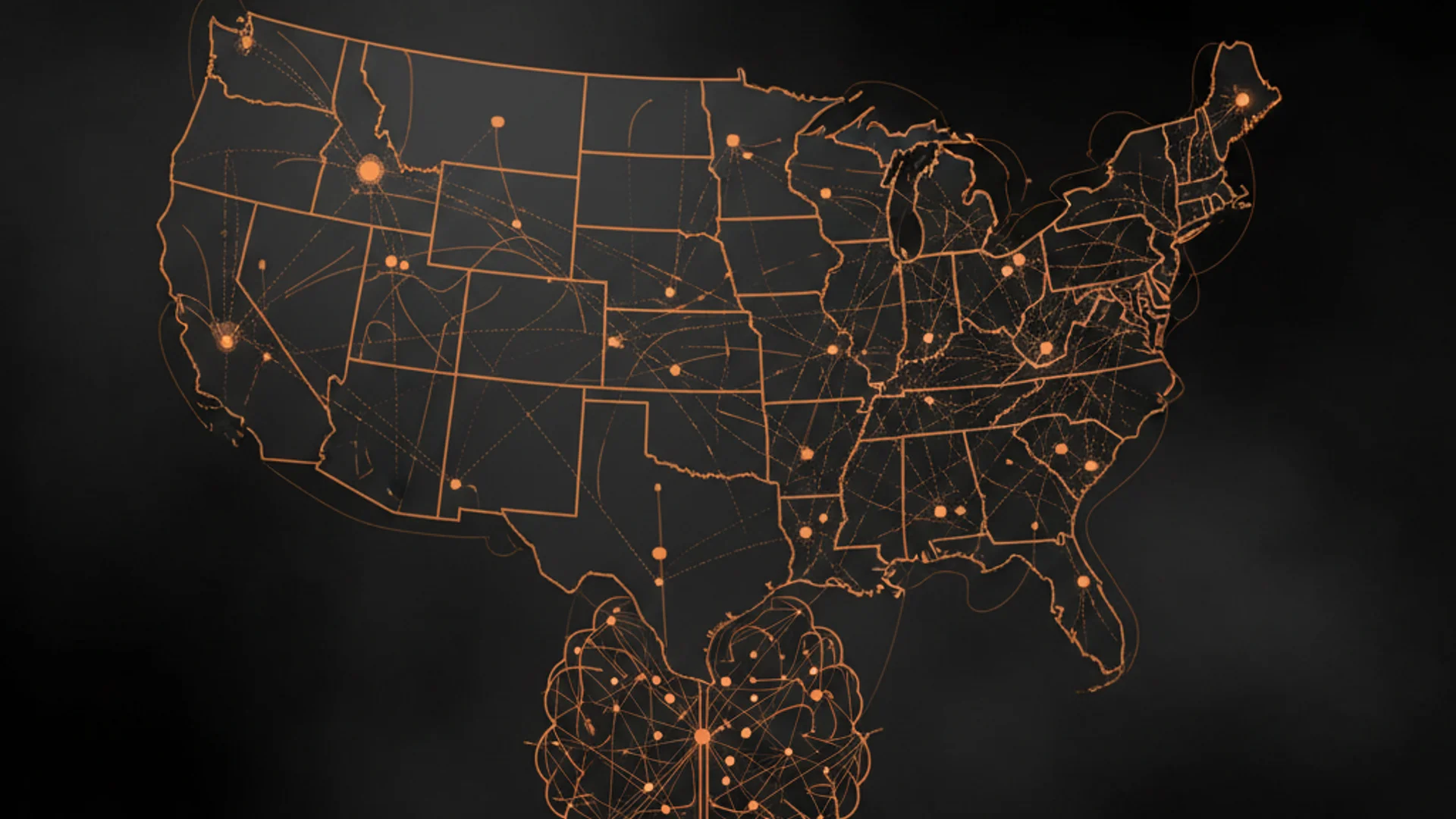
It gets worse. Your state's database doesn't stay in your state. The National Association of Boards of Pharmacy runs something called PMP InterConnect, a system that links state databases so authorized users can query records across state lines. Over 40 states participate. If you filled a prescription in Oregon and then moved to Ohio, an Ohio doctor—or an Ohio cop—can pull your Oregon records. There is no single federal PDMP, which technically means there's no "national prescription database." But that's a linguistic dodge. When 40+ state systems share data in real time through a centralized hub, the distinction stops mattering. Functionally, it's a national network. The architecture is distributed, but the effect is centralized surveillance. This interstate sharing was sold as a way to catch people crossing state lines to dodge monitoring. But it also means your medical history follows you. You can't move to escape your records. You can't start fresh in a new state. The data moves with you, or more accurately, it sits waiting in every state you've ever filled a prescription, accessible to every state you ever move to. Nobody asked if you wanted your medical history to be portable like this. Nobody explained that filling a prescription in Nevada during a vacation creates a record accessible to authorities in your home state. The system was built for law enforcement convenience and public health monitoring, not patient autonomy. Your prescription history is treated like a national ID number—permanent, portable, and largely outside your control.
Who Can See Your Records (And Why That Should Scare You)
In over 35 states, law enforcement can access PDMP data without a warrant. They don't need probable cause. They need an administrative subpoena, or in some cases, nothing more than an assertion that they're conducting an investigation. The standard is so low it barely qualifies as a standard. In 2012, the Oregon Supreme Court heard a case called Oregon v. Terrell. Police had accessed a suspect's prescription records from the state PDMP without a warrant. The court ruled that prescription data was protected medical information under state privacy law and that accessing it required a probable cause warrant—the same standard needed to search your house or tap your phone. That ruling was a rare win for medical privacy, but here's the problem: it only applied to Oregon. Thirty-five other states let police pull your prescription history with little or no judicial oversight. Utah gave us an even uglier example in State v. Baker (2015). Police used PDMP data not to investigate a known crime, but to go fishing—reviewing records to see who might be doing something illegal. Civil liberties lawyers called it "reverse surveillance": instead of investigating a crime and then gathering evidence, they were treating the medical database like a watchlist, looking for anyone whose prescription patterns seemed suspicious. That's not law enforcement. That's dragnet monitoring of medical patients. Only about 15 states require any kind of warrant or court order before police can access your prescription records. In the rest, the barrier ranges from minimal to nonexistent. And it's not just local cops. Federal agencies like the DEA have sought access to state PDMP systems, creating legal gray zones about whether federal agents have to follow state privacy laws when querying state databases.
So far, the answer has been inconsistent, which in practice means your privacy depends on which agency is asking and whether anyone bothers to challenge them. But law enforcement isn't the only concern. Research published in the Journal of Law, Medicine & Ethics found PDMP data showing up in child custody cases, employment disputes, and civil lawsuits. The data leaks sideways into contexts that have nothing to do with preventing overdoses or catching drug traffickers. Once your prescription history exists in a database, it becomes a tool anyone with subpoena power—or sometimes just a lawyer—can try to access. You filled a prescription legally, with a doctor's authorization, and now that decision is being used against you in a custody hearing.
The Medical Consequences Nobody Talks About
The surveillance doesn't just violate privacy. It changes medical care, and not in a good way. A 2019 study in JAMA Network Open found that PDMP implementation was associated with increased emergency department visits related to undertreated pain. Translation: people who needed medication couldn't get it, so they ended up in the ER. Another study in Health Affairs in 2018 found that while PDMP mandates reduced opioid prescribing (the intended effect), they also correlated with increases in heroin-related overdose deaths in some areas. When you cut off legal access without providing alternatives, people don't just stop being in pain. They find other sources, and those sources are more dangerous. Doctors are caught in an impossible position. They're legally required in many states to check the PDMP before prescribing opioids, but they're also afraid of being flagged themselves if they prescribe too much. The result is defensive medicine: doctors refusing to prescribe pain medication not because the patient doesn't need it, but because they don't want to appear on some regulatory radar. Dr. Kate Nicholson, a civil rights attorney and chronic pain advocate, has documented case after case of patients being abruptly cut off from medications they'd been stable on for years—sometimes because a new doctor checked the PDMP and decided the patient "looked like a risk." Patients feel it. The Pain Medicine study found that people described feeling stigmatized and accused when their doctors pulled up PDMP data during appointments. The interaction stopped feeling like healthcare and started feeling like interrogation. Some patients reported avoiding care entirely because they didn't want to be flagged.
That's the chilling effect privacy advocates warned about: when people know they're being monitored, they change their behavior, even when their behavior is legal and medically appropriate. This isn't an abstraction. People with chronic pain, post-surgical patients, cancer survivors—they're the ones caught in this system. They did nothing wrong. They're trying to manage legitimate medical conditions. But because the system is built to catch diversion and abuse, it treats everyone like a suspect. The default posture is distrust, and patients are the ones who pay the price in untreated suffering and broken trust with their providers.
What You Can Actually Do About It
You can't opt out. There's no box to check, no form to sign. If you fill a controlled substance prescription, you're in the system. But you're not completely powerless. First, find out what your state's laws actually say. The Prescription Drug Abuse Policy System tracks state-by-state PDMP policies, including who can access your data and whether a warrant is required. Some states let you request your own PDMP records—essentially pulling a report on yourself to see what's in there. It's not always easy, and some states charge a fee, but it's worth knowing what law enforcement or a potential employer might see if they go looking. Second, talk to your doctor. Ask them what gets reported and whether your state mandates PDMP checks. If you're on long-term medication for a chronic condition, ask how the monitoring system affects their prescribing decisions. You won't change the system by having that conversation, but you'll understand how it's shaping your care. And some doctors, once they realize patients are aware and concerned, start advocating for better policies. Third, push your state legislators. This is a state-level issue, which means state-level policy changes actually matter. Oregon required warrants after a state Supreme Court ruling. Other states could pass similar protections if voters demanded it. Right now, most people don't even know these databases exist, which means legislators have no political incentive to tighten access rules. If your state allows warrantless law enforcement access, that's a policy choice, not an inevitability. Finally, if you're worried about privacy and you do need to fill a controlled prescription, know that paying cash instead of using insurance doesn't keep you out of the PDMP. The pharmacy is required to report the dispensing regardless of how you pay.
The only thing cash does is keep the transaction off your insurance company's records, which is a different privacy concern but won't help with state monitoring. The bigger issue is that this system was built without public debate or informed consent. It happened quietly, state by state, justified by the opioid crisis and sold as a public health tool. But once surveillance infrastructure exists, it never stays limited to its original purpose. The data gets used in ways nobody predicted, and the access rules get loosened over time because it's always easier to expand surveillance than to roll it back.
Frequently Asked Questions
Can I find out what's in my state's prescription monitoring database about me?
It depends on your state. Some states allow you to request your own PDMP records, though the process varies. You typically need to contact your state's board of pharmacy or the agency that administers the PDMP. Some states charge a small fee. Some make it easy with an online portal. Others require a formal written request. Start by searching '[your state] PDMP patient access' to find the specific process where you live.
Does paying cash for my prescription keep it out of the database?
No. Pharmacies are required to report controlled substance prescriptions to the state PDMP regardless of how you pay. Cash, insurance, GoodRx—it doesn't matter. The reporting requirement is based on the drug classification, not the payment method. Paying cash will keep the transaction off your insurance records, but it won't keep it out of the state monitoring system.
If I move to a different state, does my prescription history follow me?
Yes, if both states participate in interstate data sharing through PMP InterConnect. Over 40 states share PDMP data across state lines. That means a doctor or law enforcement officer in your new state can access prescriptions you filled in your old state. The records don't transfer automatically, but they're accessible when someone queries the system.
Do police need a warrant to access my prescription records?
It depends entirely on your state. About 15 states require a warrant or court order. The rest allow law enforcement access with an administrative subpoena, an active investigation claim, or in some cases, direct access with no prior approval. Oregon's Supreme Court required warrants after the 2012 Terrell case, but that ruling only applies in Oregon. Check your state's specific PDMP law to know what protections (if any) you have.
Can PDMP data be used against me in non-criminal cases like custody disputes?
Yes. Research has documented PDMP data appearing in child custody proceedings, employment disputes, and civil litigation. While the system was designed for preventing doctor shopping and overdose, once the data exists in a database, it can potentially be subpoenaed for other legal proceedings. The extent of this secondary use varies by state and depends on local court rules about medical record discovery.
How long do states keep prescription records in the PDMP?
Most states retain PDMP data for one to five years, but some keep records indefinitely. There's no federal standard, and states set their own retention policies. That prescription you filled years ago may still be in the system. The 2016 GAO report found that many states lack clear data purging policies, meaning old records often remain accessible long after they're clinically relevant.
Will my doctor know if law enforcement accessed my prescription records?
Probably not, and you probably won't know either. The 2016 GAO report found that many state PDMP systems had inadequate audit logging, meaning there might be no way to track who accessed your records or when. Some states have improved their systems since then, but transparency about law enforcement access remains inconsistent. In most states, there's no requirement to notify you if your records are pulled for an investigation.
Conclusion
This system exists because it was built quietly, justified by crisis, and never seriously debated in public. Most people don't know these databases exist until they're sitting in a doctor's office being told they can't get a refill because the PDMP flagged them. By then it's too late to opt out—you've been in the system since the first prescription. The only leverage you have is awareness and noise. Check your state's laws. Request your own records if your state allows it. Ask your representatives why law enforcement can access medical data without warrants when they can't search your phone without one. Tell other people this exists, because the system's biggest advantage is that nobody knows it's there. SurvivalBrain is building tools that work offline and keep your data local because we're done pretending that \"trust the system\" is an acceptable privacy model. If you want AI that doesn't phone home with your queries, get on the waitlist at https://survivalbrain.ai/#waitlist—we launch Q1 2026, and early access is $149 instead of $199. Your prescriptions are already in a database. Your questions don't have to be.
📚 Sources
- [1] Oregon Supreme Court - Oregon v. Terrell (2012) (Court Opinion)
- Establishes legal precedent regarding PDMP privacy protections and warrant requirements
- [2] National Association of Attorneys General - PDMP Privacy Investigation (2017)
- Documents variance in state access laws and privacy protections
- [3] Journal of Law, Medicine & Ethics - PDMP Data in Civil Proceedings (Research Study)
- Documents secondary uses of PDMP data beyond stated purposes
- [4] JAMA Network Open - PDMP Implementation and Emergency Department Visits (2019)
- Establishes correlation between monitoring and undertreated pain
- [5] Health Affairs - PDMP Mandates and Opioid Prescribing Study (2018)
- Documents both intended effects and unintended consequences including heroin overdose increases
- [6] Government Accountability Office - PDMP Security Vulnerabilities Report (2016)
- Identifies specific security weaknesses in state monitoring systems
- [7] Prescription Drug Abuse Policy System - State Law Analysis
- Provides comparative analysis of warrant requirements across states
- [8] National Association of Boards of Pharmacy - PMP InterConnect System Documentation
- Explains interstate data sharing mechanisms and participation
- [9] Bureau of Justice Assistance - PDMP Funding and Policy Guidelines
- Establishes law enforcement perspective and program objectives
- [10] Pain Medicine Journal - Patient Stigmatization Study
- Documents patient experiences and care-seeking behavior impacts
Get Early Access to Uncensored Offline AI
Join the waitlist for SurvivalBrain launching Q1 2026. Early supporters lock in $149 lifetime pricing (save $50).
Lock In $149 Pricing