Your Phone Has a Government Kill Switch: What Preppers Need to Know Before the Next "Emergency"
Introduction
On August 11, 2011, something happened in San Francisco that most Americans still don't know about. At 4:00 PM, during evening commute, the Bay Area Rapid Transit system did something no government entity in U.S. history had done before: they flipped a switch and turned off cell service for thousands of people underground. For three hours, if you were in those tunnels and your kid needed to reach you, or you needed to call 911, or you were just trying to tell someone you'd be late—nothing. Dead air. The reason? BART police didn't want protesters organizing against them after they'd shot and killed a homeless man named Charles Blair Hill. That should've been a national scandal. It should've triggered congressional hearings and constitutional crises. Instead, it revealed something far more unsettling: the infrastructure was already built. The legal framework already existed. And nobody—not the courts, not Congress, not the FCC—stopped it from happening. Here's what they're not telling you: your phone has a kill switch. Not the "Find My iPhone" feature you control—a government kill switch. It's not a conspiracy theory. It's federal policy, tested on American soil, embedded in systems you use every day. The Integrated Public Alert & Warning System that blares Amber Alerts at 3 AM? That's the same infrastructure that gives the President the capability to address every American within 10 minutes during a declared emergency. And buried in that capability is something else: Standard Operating Procedure 303, a protocol designed in secret that lets the executive branch shut down communications without a court, without transparency, without you ever knowing it was deliberate until it's already done.
The BART Precedent: When 'Public Safety' Meant Silencing Dissent
Let's go back to that August evening in 2011, because the details matter. BART's deputy police chief Benson Fairow justified the shutdown by saying protesters near trains and high-voltage third rails were 'a recipe for disaster.' Sounds reasonable, right? Except the protesters weren't actually endangering themselves—they were organizing via social media to demonstrate against police violence. And BART's solution wasn't to increase security or reroute trains. It was to cut communications for everyone. Thousands of people—commuters, parents, people with medical emergencies—lost connectivity. Not because of a technical failure. Because a government agency decided their ability to communicate was inconvenient. As one legal scholar put it: 'a broad prior restraint on the communications of thousands of cellphone users—not just demonstrators, but also kids talking to their parents and adults talking to their doctors.' Here's the legal loophole BART exploited: they owned the underground wireless network. So technically, they weren't jamming signals (which is illegal under Section 333 of the Communications Act of 1934). They were just... turning off their own equipment. UCLA Law professor Jerry Kang noted there's 'a difference between affirmatively jamming a signal sent by a carrier and deciding not to provide, repeat, or boost that carrier's signal.' That distinction is doing a lot of work. Because from the user's perspective, the outcome is identical: your phone doesn't work, and the government made that decision. First Amendment scholars told reporters they couldn't remember a time when a public agency in the U.S. had moved to disrupt wireless traffic in quite that way. The ACLU called it 'fatally overbroad' and a 'quintessential prior restraint that prohibits speech before it happens—which the government cannot do.' But here's the thing: BART did it.
And the infrastructure that made it possible isn't limited to the Bay Area. It's national.
SOP 303: The Secret Protocol With No Judge, No Oversight, No Transparency
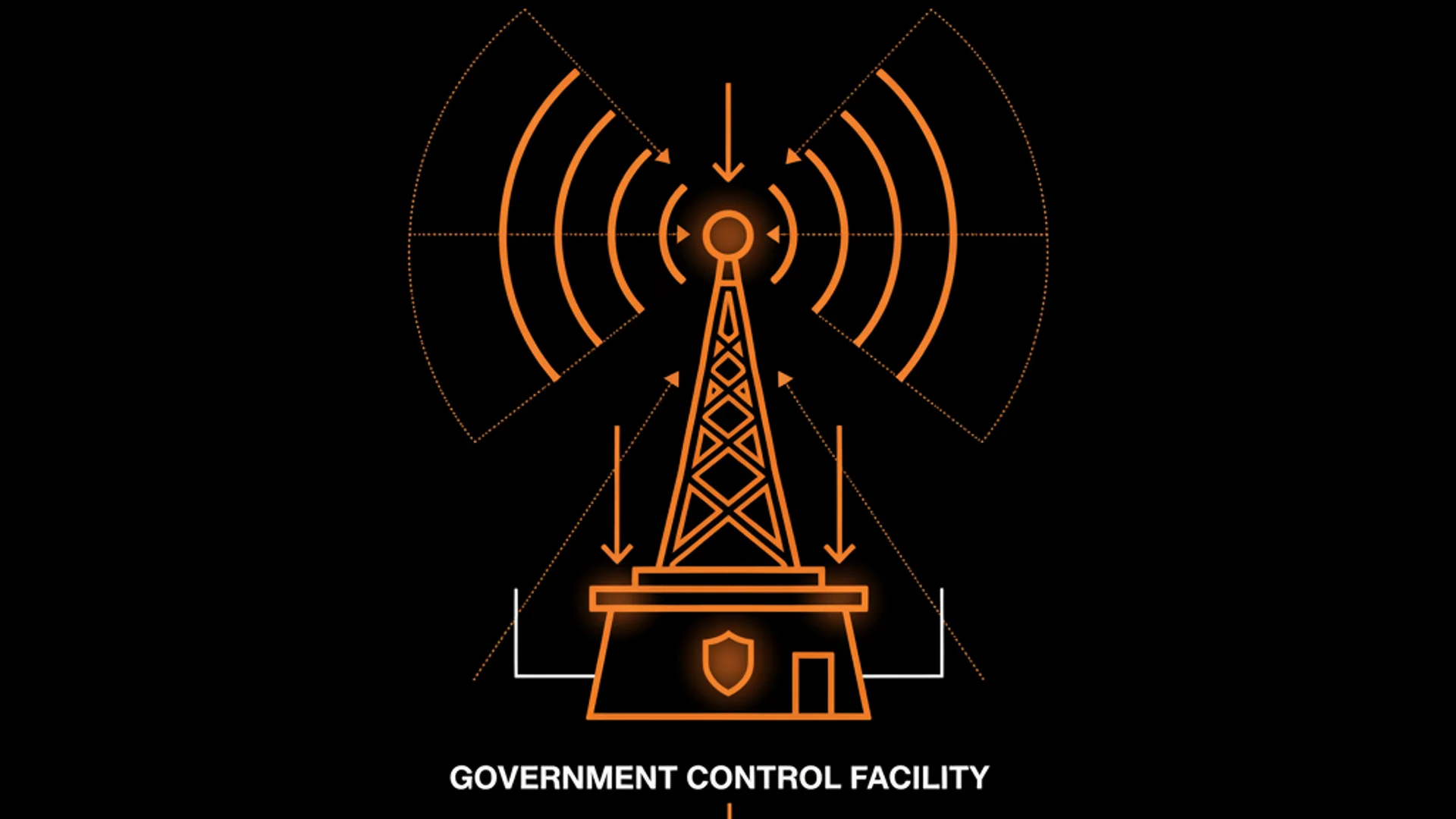
Standard Operating Procedure 303 is the protocol the federal government uses to shut down communications during emergencies. And almost everything about it is classified. What we know comes from a Government Accountability Office report and statements from organizations like the Center for Democracy and Technology, which noted: 'There is no court in the loop at all, at any stage in the SOP 303 process.' Read that again. No court. No warrant. No judicial oversight. The executive branch can shut down your ability to communicate—locally or across an entire metropolitan area—and you have no legal recourse until after it's already happened. The GAO report confirms the government is explicitly authorized to target 'a localized area' like a bridge, or 'potentially an entire metropolitan area.' Not just federal facilities. Not just military zones. Public infrastructure where you live, work, and move. In 2012, President Obama reaffirmed in a July executive order that the Department of Homeland Security could seize private facilities and shut down communications during emergencies. The Emergency Alert System—the thing that gives you weather warnings—requires broadcasters and wireless operators to provide the President with the capability to address the American people within 10 minutes during a national emergency. That's not a request. It's federal law. And embedded in that requirement is the technical infrastructure to do the reverse: not broadcast to your phone, but silence it. Communications experts say killing phone service is easier than most people think because there are only a few companies the government has to deal with. A call from federal or state authorities to Verizon, AT&T, and T-Mobile could smother cellphone communications in a targeted area within minutes.
And there's an emergency exception baked into the law: if a local police chief calls carriers saying there's a riot and they need service halted for safety reasons, the companies can choose to comply. It's legal. It's happened. And the protocol is designed so you won't know it was deliberate until much later—if ever.
IPAWS: The Broadcast System You Can't Turn Off
You've heard that sound. The one that makes your gut clench even when it's just a weather alert. That's the Wireless Emergency Alert system, part of FEMA's Integrated Public Alert & Warning System (IPAWS). FEMA established IPAWS in 2006 by Presidential Executive Order 13407, and today more than 1,800 federal, state, local, tribal, and territorial alerting authorities use the system. Here's how it works: wireless providers use cell broadcast technology to send WEA messages from cell towers to every compatible phone within a defined geographic area. Not to specific numbers—to every device in range. And here's the part that should concern you: consumers cannot block National Alerts. Congress specifically allowed carriers to let subscribers opt out of threat alerts and AMBER Alerts, but not National Alerts. Your phone will receive them whether you want it to or not. That's a one-way broadcast infrastructure with mandatory reception, built into every smartphone sold in America, controlled by 1,800+ government entities you've never heard of. Most of the time, it's used for weather warnings and missing children. But the infrastructure doesn't know the difference between a tornado warning and a protest suppression order. It's just a pipe. And the people who control the pipe have legal authority to use it however they define 'emergency.' And then there's the California mandate. Starting in July 2015, every smartphone sold in California was required to have a kill switch feature allowing users to remotely wipe contents and make phones unusable. Governor Jerry Brown made California the first state to require the remote wipe option be automatically turned on by default. The official justification was theft deterrence—if someone steals your phone, you can brick it remotely.
But when the wireless industry's lobbying organization (CTIA) testified before Congress in 2014, they issued a warning that's been memory-holed: kill switches 'could be used to disable entire groups of customers, such as Department of Defense, Homeland Security or emergency services/law enforcement.' They also warned that if all devices were made with this capability, 'it could be used maliciously to disable devices for spite or to target specific groups of users like government employees,' and that 'for this technology to be effective, it would have to be reversible, meaning criminals could figure out how to undo the kill switch.' California ignored the warning. Every smartphone you've bought since 2015 has that capability built in. And the people who could activate it remotely aren't just you.
Stingrays, Standing Rock, and the Surveillance Layer
Shutting down your phone is one thing. Impersonating a cell tower to intercept your calls is another. In parts of the United States, law enforcement has tools called 'stingrays' or 'IMSI catchers' that work by pretending to be a legitimate cell tower. Your phone connects to it, thinking it's talking to Verizon or AT&T, and the device collects your phone's identifying details. Newer models are believed to be able to intercept calls and messages in real time. If your phone is on and unsecured at a protest, your location can be tracked. Unencrypted communications may be intercepted. If police take custody of your phone—or later obtain it via warrant or subpoena—they can retrieve messages and call logs. This isn't theoretical. It's documented in law enforcement procurement records and court cases across the country. During the 2016 Standing Rock protests, tribal leaders believed police were jamming cellphones. But here's the problem: proving jamming is nearly impossible for ordinary people. As Wired reported, it's difficult to tell whether something nefarious is happening or there's just a bad signal. Only bodies like the FCC really have the ability to verify jamming has occurred. And they didn't investigate Standing Rock. That's the pattern: suppression happens, people notice, but proving it requires technical resources and legal authority that protesters don't have. By the time anyone with investigative power looks into it, the crisis is over, the moment has passed, and the official position is that nothing improper occurred. Meanwhile, the infrastructure gets more sophisticated, the legal justifications get more refined, and the next shutdown happens a little more smoothly.
Jay Stanley, a senior policy analyst with the ACLU's Speech, Privacy, and Technology Project, told reporters that communication shutdowns are 'an odious form of abuse'—something used worldwide 'as a way to cloak suppressive violence and other human rights violations.' Americans tend to think of deliberate service stoppages as tactics employed by oppressive regimes abroad. But BART did it in San Francisco in 2011. Standing Rock experienced suspicious outages in 2016. And the infrastructure has only expanded since then.
What 'Emergency' Actually Means When They Control the Definition
Here's the question nobody's answering: who decides what constitutes an emergency serious enough to justify shutting down communications? BART said it was protesters near train tracks. Federal authorities could say it's a riot, a terrorist threat, or civil unrest that threatens public safety. But 'public safety' is elastic. It can mean protecting lives. It can also mean protecting the government's ability to operate without public scrutiny. UCLA professor John Villasenor noted that 'for the first time ever, it has become easy for anyone to instantaneously and simultaneously communicate with large, specifically selected subgroups of people.' That capability terrifies governments because it makes organizing resistance trivially easy. A protest that used to require weeks of phone trees and flyers can now materialize in hours via a few viral posts. And the same infrastructure that makes that possible—cellular networks, social media, smartphones—can be shut down by the same government you're protesting against. Consider the stakes: seventy percent of 911 calls now come from wireless phones. Shutting off wireless service in response to an anticipated public safety threat creates a different public safety problem. There's some probability that a life-or-death 911 call will not get through. Someone having a heart attack in the BART tunnels during that three-hour blackout couldn't call for help. That's not hypothetical. That's the trade-off authorities made, explicitly, when they decided protest coordination was a bigger threat than emergency access. The legal framework treats this as an acceptable risk. The emergency exception in the Communications Act allows shutdowns when authorities deem them necessary. SOP 303 operates without judicial oversight, meaning nobody outside the executive branch reviews the decision in real time.
And because the protocol is classified, you don't know what criteria they're using, what evidence they require, or how they distinguish between a legitimate emergency and a politically inconvenient protest. What we're witnessing is a fundamental shift in the balance of power. Your ability to communicate—to organize, to document, to call for help—is no longer a right you can exercise freely during a crisis. It's a privilege the government can revoke, in secret, with no judge involved, under legal frameworks established after 9/11 and refined through incidents like BART and Standing Rock. And the infrastructure is already built into the device in your pocket.
Frequently Asked Questions
Can the government actually shut down my cell phone remotely?
Not individually—but they can shut down service in your area. Through Standard Operating Procedure 303, federal authorities can order wireless carriers (Verizon, AT&T, T-Mobile) to cut service in a 'localized area' like a bridge or an 'entire metropolitan area' according to Government Accountability Office reports. This happened in San Francisco in 2011 when BART shut down underground cell service for three hours to prevent protest organizing. The Communications Act of 1934 bans jamming, but includes an emergency exception that allows shutdowns when authorities claim public safety concerns.
What is Standard Operating Procedure 303 and why is it secret?
SOP 303 is the classified federal protocol for shutting down communications during emergencies. According to the Center for Democracy and Technology, 'There is no court in the loop at all, at any stage in the SOP 303 process'—meaning the executive branch can act without judicial oversight or public transparency. We only know it exists because of Government Accountability Office reports and FOIA requests. The criteria for activation, the decision-making process, and the oversight mechanisms are all classified. That means authorities can shut down communications in your area and you won't know it was deliberate until much later, if ever.
Can I opt out of Emergency Alert System messages?
Not the important ones. Congress specifically allowed wireless carriers to let you block threat alerts and AMBER Alerts, but you cannot block National Alerts. Those are mandatory. Every WEA-capable phone within range of a cell tower broadcasting a National Alert will receive it, whether you want it or not. This is the same infrastructure—FEMA's Integrated Public Alert & Warning System (IPAWS)—that gives the President the capability to address all Americans within 10 minutes during a national emergency. It's a one-way broadcast system with mandatory reception, controlled by more than 1,800 federal, state, local, tribal, and territorial authorities.
What are 'stingrays' and can police use them on protesters?
Stingrays (also called IMSI catchers or cell-site simulators) are devices that impersonate legitimate cell towers. Your phone connects to them automatically, thinking it's talking to Verizon or AT&T, and the device collects your phone's identifying information. Newer models can intercept calls and text messages in real time. Law enforcement agencies across the U.S. have purchased these devices, and they've been documented at protest sites. During the 2016 Standing Rock protests, tribal leaders believed police were using them to jam or surveil communications, but the FCC never investigated. If your phone is on at a protest, your location can be tracked and your communications potentially intercepted.
Is there any way to communicate if the government shuts down cell service?
Mesh networks, satellite communicators, and ham radio are your main options—but each has limitations. Mesh networks (like Bridgefy or Briar) let phones communicate directly with each other via Bluetooth without cell towers, but require many people nearby using the same app. Satellite communicators (like Garmin inReach) bypass cellular infrastructure entirely but cost $300+ and require subscription fees. Ham radio requires a license and equipment, but can't be shut down by local authorities. The hard truth: if you're dependent on cellular networks and the government decides to cut service, your options are extremely limited unless you've prepared alternative communication methods in advance.
Has this ever happened outside the United States?
Yes, and frequently in ways that should terrify you. Egypt shut down internet and cell service during the 2011 Arab Spring protests. Iran has repeatedly cut communications during anti-government demonstrations. India shut down internet in Kashmir for over a year—the longest internet shutdown in a democracy. China routinely censors and monitors communications. The ACLU's Jay Stanley noted that communication shutdowns are 'an odious form of abuse' used worldwide 'as a way to cloak suppressive violence and other human rights violations.' The difference isn't that America lacks the capability—BART proved we have it. The difference is how often authorities choose to use it. So far.
What was the official justification for BART shutting down cell service?
BART's deputy police chief Benson Fairow claimed protesters near trains and high-voltage third rails were 'a recipe for disaster' and could 'clash with commuters, create panicked surges of passengers, and put themselves or others in the way of speeding trains.' But the real context: protesters were organizing via social media to demonstrate against BART police shooting and killing Charles Blair Hill, a homeless man. BART's solution wasn't increased security or rerouting trains—it was cutting communications for thousands of commuters during evening rush hour. Legal scholars noted this was a 'broad prior restraint' affecting not just protesters but 'kids talking to their parents and adults talking to their doctors.'
Conclusion
So what do you do with this information? First, understand that your smartphone isn't just a tool you control—it's infrastructure that can be controlled. During the next hurricane, civil unrest, or declared emergency, authorities have legal mechanisms and technical capability to shut down your ability to communicate. That's not paranoia. That's federal policy, tested in San Francisco, refined through protocols like SOP 303, and embedded in systems like IPAWS that are already on your phone. If you're serious about maintaining communication capability during a crisis, you need alternatives that don't depend on cellular networks. Mesh networking apps for local coordination. Satellite communicators that bypass terrestrial infrastructure entirely. Ham radio licenses and equipment. Offline AI systems that work when the internet doesn't—which is exactly why we built SurvivalBrain. It's an offline AI system (no internet required) that runs on base LLM plus ATLAS knowledge packs, designed specifically for privacy, censorship-resistance, and functionality during emergencies. Launching Q1 2026, $149 early access ($50 off the regular $199 price). If you want communication and information access that nobody can shut down remotely, get on the waitlist at https://survivalbrain.ai/#waitlist. Because the next time someone decides your ability to communicate is inconvenient, you'll be glad you prepared when you still could.
📚 Sources
- [1] Slate (2020): Police Cell Service Shutdown Capabilities (https://slate.com)
- Establishes government technical capability to shut down cell service and legal mechanisms
- [2] ACLU Legal Filings on BART Cell Shutdown (https://aclu.org)
- Constitutional analysis of cell shutdowns as prior restraint and First Amendment violations
- [3] Indiana Law Journal: BART Cell Phone Service Shutdown Legal Analysis
- Academic legal analysis of the BART precedent and constitutional implications
- [4] Bill Moyers (2013): Government's Secret Plan to Shut Off Cellphones (https://billmoyers.com)
- Reveals SOP 303 protocol and lack of judicial oversight in emergency shutdown procedures
- [5] NPR (2011): BART Cell Service Shutdown Free Speech Analysis (https://npr.org)
- First Amendment scholar perspectives and historical context of government communication disruption
- [6] FEMA.gov: IPAWS and Emergency Alert System Documentation (https://fema.gov)
- Official documentation of IPAWS infrastructure, Presidential Executive Order 13407, and 1,800+ alerting authorities
- [7] FCC.gov: Emergency Alert System Regulations and Wireless Emergency Alerts (https://fcc.gov)
- Federal regulations on WEA, cell broadcast technology, and mandatory National Alerts
- [8] SF Gate (2011): Original BART Shutdown Reporting (https://sfgate.com)
- Primary source reporting on August 11, 2011 incident including timeline and official justifications
- [9] Fast Company (2012): BART Legal Analysis (https://fastcompany.com)
- Analysis of legal gray areas and BART's ownership of underground network infrastructure
- [10] LAist: Cellphone Surveillance at Protests Guide (https://laist.com)
- Documentation of stingray/IMSI catcher capabilities and surveillance tactics at protests
- [11] CTIA Congressional Testimony (2014): Kill Switch Technology Risks
- Wireless industry warnings about kill switch vulnerabilities and potential misuse against government personnel
- [12] Wired (2016): Standing Rock Cell Jamming Reports (https://wired.com)
- Documentation of alleged jamming at Standing Rock and FCC failure to investigate
- [13] Government Accountability Office Report: Emergency Communication Authorities
- Confirms federal authorization to target localized areas or entire metropolitan areas
- [14] UCLA Law Professor Jerry Kang and John Villasenor Statements
- Legal distinctions between jamming and service denial, historical context of communication shifts
Get Early Access to Uncensored Offline AI
Join the waitlist for SurvivalBrain launching Q1 2026. Early supporters lock in $149 lifetime pricing (save $50).
Lock In $149 Pricing